

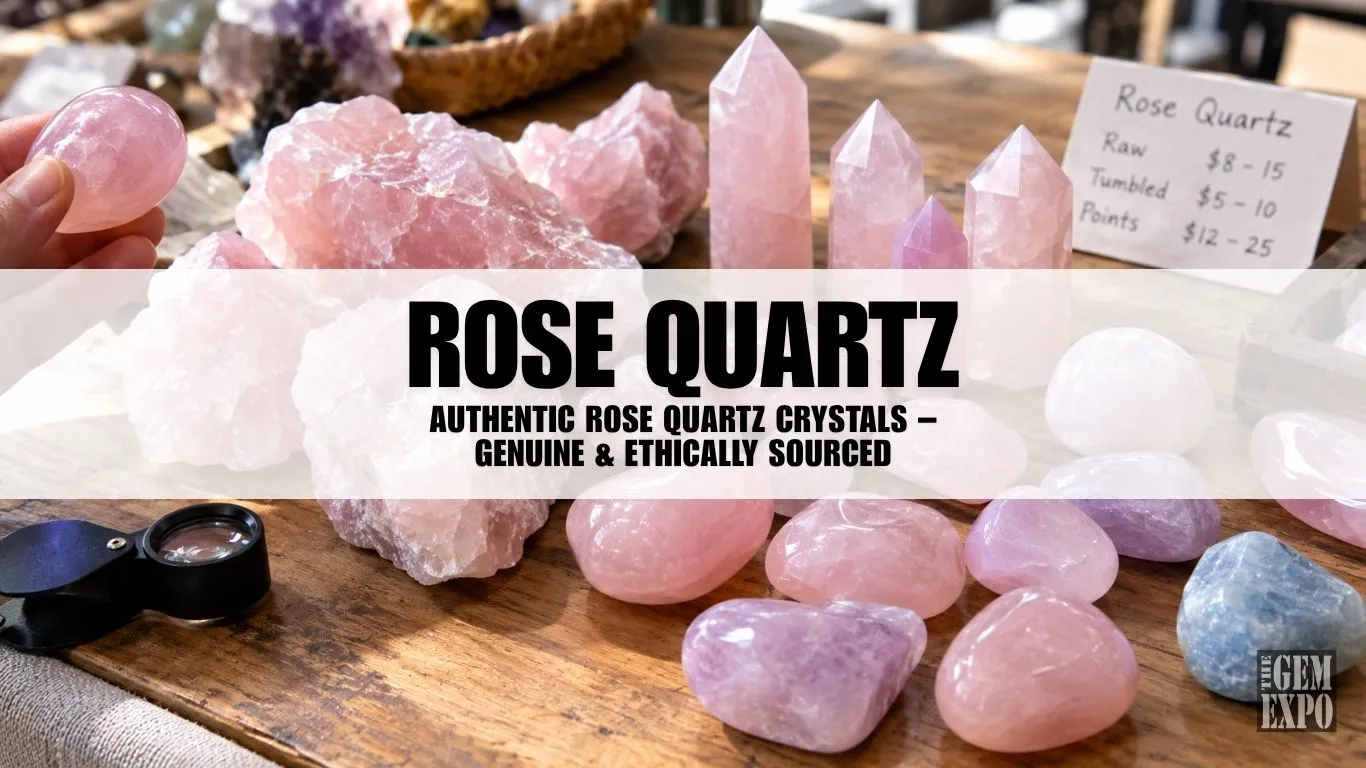

A woman once walked into a crystal shop in Toronto holding a pink stone she had bought online for eight dollars. She wanted to know if it was real. The shopkeeper held it to the light, turned it over twice, and shook her head. It was dyed glass. The woman had been carrying it in her pocket for months, thinking it was authentic rose quartz. Stories like this happen more often than people think, and they are exactly why so many Canadians now search for authentic rose quartz before they spend a single dollar.
Rose quartz is one of the most loved pink stones in the world, soft, warm, and tied to feelings of love and calm. Because it is so popular, it is also one of the most faked stones on the market, with glass, resin, and dyed quartz sold as the real thing every day. Knowing what to look for before you buy makes all the difference. Ready to see the real thing up close? Visit The Gem Expo at our next Toronto show and hold authentic rose quartz in your own hands before you decide.
What Makes Rose Quartz Authentic
Rose quartz forms deep inside the earth, usually inside pegmatites, over thousands of years. Its soft pink colour comes from tiny mineral fibres trapped inside the quartz, not from dye or paint, which is why real rose quartz almost never looks perfectly clear. Most pieces have a slightly cloudy or milky look, since those fibres scatter light as it passes through the stone.
A piece of original rose quartz usually feels cool at first, then warms in your hand. It also carries a Mohs hardness of about 7, so it scratches glass without much effort, while cheap glass imitations feel softer and often greasy. None of these checks need special tools, just a moment of attention before buying.
Raw Rose Quartz vs Polished Rose Quartz Crystal
Shoppers often ask whether raw rose quartz is better than a polished piece. The honest answer is that it depends on what the crystal is for. Raw pieces keep their natural rough surface and are popular for home decor and meditation spaces. Polished stones, sometimes called a pink quartz crystal, are smoothed and shined, which makes them a common choice for jewellery and pocket stones.
| Type | Look and Feel | Common Use |
|---|---|---|
| Raw Rose Quartz | Rough, natural edges, unpolished | Home decor, altars, collecting |
| Tumbled Rose Quartz | Smooth, rounded, glossy | Pocket stones, gifts, grids |
| Rose Quartz Jewellery | Cut and polished into beads or cabochons | Necklaces, bracelets, rings |
Both raw and polished forms can be genuine rose quartz stones, so the choice really comes down to personal taste rather than authenticity. What matters more is where the stone was sourced and whether the seller can speak honestly about its origin.
Pink Quartz and Its Colour Family
Pink quartz is the general name for the mineral family that rose quartz belongs to, and the shade can range from a very pale blush to a deep rose pink. Deeper colour tends to show up in larger pieces, while smaller stones are often lighter. This is a natural pattern in quartz formation, not a sign of poor quality. A polished pink quartz crystal usually shows its truest colour when it is held up to natural daylight rather than indoor lighting, which can make authentic rose quartz look either paler or warmer than it really is.
Lavender Rose Quartz
Lavender rose quartz carries a soft purple undertone mixed into the pink, formed when trace minerals sit alongside the usual pink-causing fibres. Collectors often seek this variety because it sits between rose quartz and amethyst in appearance, making each piece feel a little more unique.
Blue Rose Quartz
Blue rose quartz, sometimes labelled dumortierite quartz, gets its cooler tone from a different set of mineral inclusions. It is rarer than the standard pink form and costs more per gram, and because it is less common, it is also more heavily faked, so ask sellers directly about its source before paying a premium.
How to Tell Real Rose Quartz From a Fake
Spotting real rose quartz does not require a gemology degree. A few simple checks go a long way.
- Look for cloudiness. Perfectly clear pink glass is a red flag.
- Check the weight. Natural quartz feels heavier than glass or resin of the same size.
- Scratch test with care. Quartz can scratch window glass; dyed glass usually cannot.
- Ask about the source. A seller who can name the mine is more trustworthy than one who cannot.
- Compare the price. A large, deeply coloured piece priced far below market rate is a warning sign, not a bargain.
For readers who want a technical reference, the Gemological Institute of America has published detailed notes on how rose quartz is identified and evaluated, including the inclusions that give the stone its cloudy character.
Pairing Authentic Rose Quartz With Other Crystals
Many collectors do not stop at one stone. Crystal grids and jewellery sets are often built around combinations, and questions about amethyst with rose quartz pairings come up almost as often as questions about the pink stone on its own.
Amethyst and Rose Quartz
People frequently search for amethyst and rose quartz meaning because the two stones are often placed together on altars and in jewellery sets. Amethyst is linked with calm and clarity, while rose quartz is linked with love and comfort, so the pairing is seen as balancing the heart and the mind. New collectors usually look up amethyst and rose quartz meaning before deciding how to arrange the two stones on a shelf or grid. If you would like to learn more about the purple stone in this pairing, our amethyst crystal guide breaks down its formation and colour grades.
A three-stone set built from amethyst clear quartz and rose quartz is one of the most requested combinations at gem shows, since clear quartz is believed to amplify the properties of the stones placed beside it. Building an amethyst clear quartz and rose quartz set does not need to happen all at once, and many buyers pick up one stone per visit instead of buying all three together. Some shoppers prefer a simpler two-stone approach, keeping just amethyst with rose quartz on their nightstand rather than adding a third crystal to the mix.
Blue Lace Agate and Rose Quartz Together
Another popular pairing is blue lace agate and rose quartz together, chosen for a calm, gentle colour palette that mixes soft blue with soft pink. Blue lace agate belongs to the wider agate family, and readers curious about banded stones can find more detail in our agate stone overview.
Some collectors round out their pink and blue palette with green aventurine for a fuller crystal grid.
Others skip the blue tones entirely and add citrine crystals instead, aiming for a warmer accent next to the softness of rose quartz.
Seeing these combinations in person makes a real difference, and that is exactly what our show floor is built for. Come talk to vendors directly, compare stones side by side, and ask the questions that a listing photo can never answer.
Buying Rose Quartz Online in Canada
Shopping for rose quartz online has become the default for many Canadians, though it comes with extra risk since you cannot hold the stone before paying. Photos should show the stone from multiple angles under natural light, not just one flattering close-up, and listings that name the mine of origin tend to be more reliable than vague ones.
It is also worth checking whether a seller has a physical presence, such as a booth at a gem show, rather than only an online storefront. Vendors who show up in person tend to stand behind their stones, since their reputation depends on it face to face.
Sellers who show photos of rough, unpolished material alongside the finished piece are usually a safer bet, since it is much harder to fake original rose quartz at the raw stage than after it has been cut and shined. Some buyers use a piece of lapis lazuli as a comparison point, since its deep blue colour is easier to fake convincingly, so a seller careful about labelling one is usually careful about labelling the other.
Caring for Your Rose Quartz Stones
Rose quartz is durable, but it still benefits from gentle care. Rinse it with lukewarm water and a soft cloth rather than harsh chemicals, and keep it off a sunny windowsill, since long stretches of direct sunlight can fade the pink colour in some pieces.
Many owners also like to cleanse their rose quartz crystal with sound, such as a singing bowl, or by resting it near moonstone crystals overnight.
Others prefer to place it beside a piece of labradorite instead, though none of this is required for the stone to stay physically sound. It is simply a ritual many collectors enjoy.
FAQs
How much does authentic rose quartz cost in Canada?
Price depends on size, colour depth, and whether the piece is raw or polished. Small tumbled stones often run five to fifteen dollars, while larger carvings or deeply coloured specimens can reach into the hundreds. Rare varieties, such as star rose quartz or blue rose quartz, usually cost more per gram. A price that seems too low for the size and colour is often a sign the stone isn't genuine.
Is it safe to cleanse rose quartz in water?
Yes, brief rinsing under lukewarm water is fine for most rose quartz, since it sits at a hardness of 7 and holds up well to moisture. Longer soaks or salt water are best avoided, as salt can wear down the surface over time and dull its shine. A quick rinse followed by a soft cloth is the safest routine for keeping the stone clean.
What's the difference between rose quartz and pink amethyst?
Rose quartz gets its colour from microscopic mineral fibres and usually looks cloudy or milky, while pink amethyst is a variety of quartz coloured by iron and tends to be more transparent with visible crystal points. Rose quartz is almost always massive or tumbled, whereas pink amethyst often forms in clusters or geodes. The two are related but chemically distinct in how their colour forms.
Is rose quartz a birthstone or anniversary stone?
Rose quartz isn't a traditional monthly birthstone, but it's recognized as the gem associated with the fifth wedding anniversary. It's also linked to the sign Taurus in some crystal traditions. Because of this, it's a common gift choice for anniversaries and milestone celebrations rather than birthdays, which sets it apart from stones tied to specific birth months.
Does rose quartz need heat treatment to get its colour?
No, rose quartz is naturally pink straight out of the ground and doesn't require heat to develop colour. Some sellers do irradiate lighter pieces to intensify the shade, which is a disclosed treatment rather than a fake. Genuine untreated rose quartz will usually show slight colour variation across the stone, while artificially enhanced pieces often look unnaturally even.
Visit The Gem Expo for Authentic Rose Quartz
Photos and descriptions can only tell part of the story. The best way to know a stone is real is to see it, hold it, and ask the person who sourced it, and that is what The Gem Expo offers three times a year at the Hyatt Regency Toronto, where dozens of trusted vendors bring in authentic rose quartz, raw specimens, and finished jewellery from around the world.
Our next show runs November 27 to 29, with vendors from Brazil, Madagascar, and closer to home across Ontario, Alberta, and British Columbia. Whether you are hunting for a simple tumbled stone or a rare blue rose quartz piece, you will find sellers who can answer your questions honestly. Browse our vendor directory, plan your visit, and come meet the people behind the stones.