
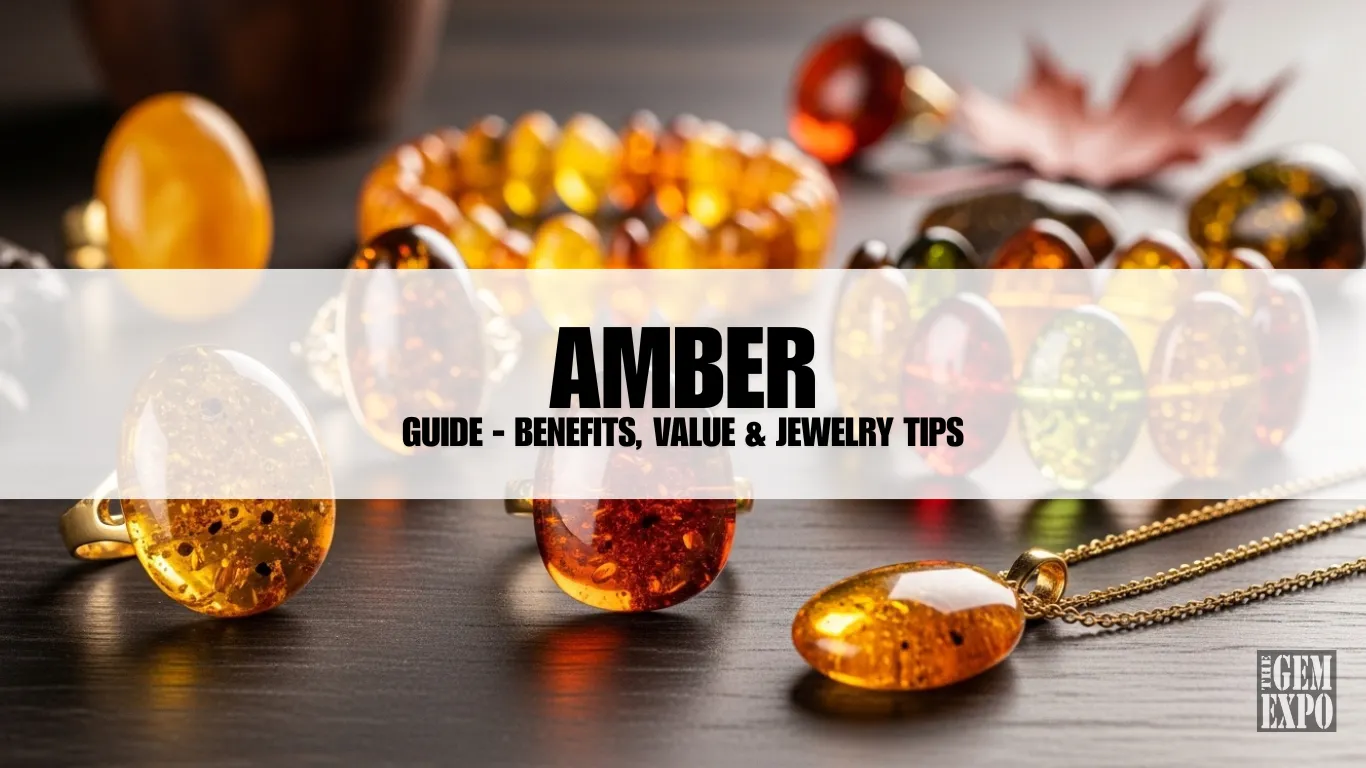

Amber is a captivating organic gemstone that has fascinated humans for centuries. Formed from fossilized tree resin, amber is valued for its warm colors, natural inclusions, and long‑standing cultural and wellness associations. Whether you want to buy amber jewelry, understand amber pricing, or explore its reputed benefits, this amber guide provides a complete and accurate overview, without misclassifying amber as a mineral.
From amber rings and amber bracelets to amber pendants, amber necklaces, and rare green amber jewelry, this article covers everything Canadian buyers, collectors, and enthusiasts need to know.
What Is Amber?
Amber is fossilized tree resin, not a traditional mineral. Over millions of years, this resin hardens and may trap insects, leaves, or other organic material, making each piece unique. Unlike typical gemstones, amber is lightweight, warm to the touch, and comes in shades ranging from golden yellow to deep brown, and occasionally green or blue.
Key Features of Amber:
- Origin: Predominantly found in the Baltic region, the Dominican Republic, and Mexico.
- Composition: Organic resin, sometimes containing fossilized inclusions, also called amber crystals or amber gem.
- Hardness: Relatively soft (Mohs 2–2.5), easy to carve or polish.
- Transparency: From transparent to opaque, often with internal inclusions.
- Forms: Amber appears as amber rock, raw amber, or polished amber gemstone ready for jewelry.
Types of Amber
Amber varies based on origin, age, and inclusions. Understanding types helps buyers assess value and price:
- Baltic Amber – Most common; rich golden hues, often with natural inclusions.
- Dominican Amber – Known for clarity and occasional blue fluorescence, highly sought for amber rings and amber earrings.
- Copal – Young resin, softer, sometimes marketed as “amber,” but less durable.
- Fossilized Amber – Contains prehistoric inclusions, making it highly collectible.
- Colored Amber: Includes red amber, yellow amber, and rare green amber, often used in bracelets and pendants.
Tip for buyers: Authenticity can be checked through UV light tests or consulting certified gem labs.
Benefits of Amber
Amber is cherished not only for its beauty but also for its healing and spiritual properties. While scientific studies are limited, holistic wellness enthusiasts often highlight:
- Pain Relief & Soothing: Amber contains succinic acid, believed to reduce inflammation and ease joint discomfort. Amber bracelets worn against the skin are popular for this purpose.
- Emotional Balance: Often used in meditation to promote calmness, positivity, and stress relief.
- Protective Energy: Considered a protective gemstone in various cultures, shielding against negative energy.
- Jewelry & Feng Shui: Adds beauty to accessories such as amber necklaces, rings with amber, and amber pendants, while promoting balance in living spaces.
Amber’s benefits are a major reason for its growing popularity in Canada, particularly among wellness and crystal enthusiasts.
Evaluating Amber Value & Cost
Amber’s value and cost depend on color, clarity, origin, inclusions, and size:
- Color: Rich, deep shades such as cognac, honey, red amber, and rare green or blue amber command higher prices.
- Clarity: Transparent pieces with minimal cloudiness are more desirable.
- Inclusions: Fossilized insects, plants, or amber crystals increase rarity and collector value.
- Size & Shape: Larger polished amber gemstones or beads fetch higher prices.
- Certification: Lab-certified amber ensures authenticity and trustworthiness.
Canadian buyers: Price ranges for amber rings, pendants, and bracelets vary depending on origin and treatment. Baltic amber is generally more affordable than rarer forms like Dominican blue amber.
Buying Amber Jewelry in Canada
Canada has a growing market for amber, and purchasing amber jewelry can be simple if you follow these tips:
- Choose Reputable Sellers: Look for certified dealers with clear return policies.
- Check for Treatments: Some amber is heat-treated or dyed; always ask for disclosure.
- Consider the Purpose: Jewelry vs. wellness use affects size, cut, and form. Amber rings, amber earrings, and amber pendants may be worn daily or as statement pieces.
- Compare Prices: Check multiple sources online or in-person to ensure value.
Pro Tip: While online marketplaces are convenient, visiting the gem expo show can help you appreciate raw amber, amber rock, or amber gemstones firsthand.
Caring for Amber Jewelry
Amber is soft and sensitive to chemicals, heat, and abrasives. Proper care ensures longevity:
- Cleaning: Use lukewarm water and mild soap, avoid ultrasonic cleaners.
- Storage: Keep separate from harder gemstones to avoid scratches.
- Avoid Chemicals: Perfumes, hairsprays, and alcohol can damage the surface.
- Polishing: Use a soft cloth, occasional professional polishing restores shine.
This is especially important for amber rings and amber necklaces, which are worn frequently.
Amber in Jewelry: Styles & Trends
Amber’s versatility makes it a favorite for various jewelry forms:
- Amber Rings & Earrings: Highlight natural inclusions for a unique touch.
- Amber Bracelets & Green Amber Bracelets: Often used for wellness and style.
- Amber Pendants & Necklaces: Classic, elegant pieces for men and women.
- Women’s Amber Jewelry: Stylish options include amber-colored necklaces, amber gem rings, and delicate amber bracelets.
2026 Trend: Layered amber necklaces, eco-conscious designs, and amber jewelry featuring amber crystals are particularly popular in Canada.
Amber is increasingly popular in Canada, especially among:
- Collectors: Seeking rare amber rocks, amber gemstones, and pieces with fossilized inclusions.
- Crystal Enthusiasts: Interested in amber crystals for meditation, chakra work, and wellness.
- Jewelry Buyers: Looking for amber rings, amber pendants, amber bracelets, and other stylish options.
Tip for Canadian buyers: Attend the gem expo show, explore online certified retailers, and look for local wellness stores specializing in amber.
FAQs
What is amber gemstone and where does it come from?
Amber is a unique organic gemstone formed from tree resin that hardened over millions of years. Its colors range from golden yellow to deep brown, with rare green or blue varieties. Key sources include the Baltic region, Dominican Republic, and Mexico. Amber is popular in jewelry such as rings, bracelets, pendants, and earrings, and is also appreciated for its metaphysical and healing properties in wellness practices.
How can I identify real amber from fake amber?
To identify real amber, look for natural inclusions like trapped insects or plant matter, which are unique to authentic pieces. Real amber is lightweight, slightly warm to the touch, and has a resinous smell when rubbed. Tests like UV light (fluoresces blue in some types), the saltwater float test, and professional certification from gem labs can confirm authenticity. Avoid dyed or heat-treated pieces sold as “amber,” especially in rings, pendants, or bracelets.
What are the benefits and healing properties of amber?
Amber is valued for both its beauty and reputed metaphysical properties. It is believed to relieve pain, reduce inflammation, promote emotional balance, and provide protective energy. Amber crystals and amber jewelry such as necklaces, bracelets, rings, and pendants are often worn for meditation, chakra work, or general wellness. While scientific evidence is limited, holistic practitioners and crystal enthusiasts worldwide, including Canada, consider amber a powerful aid for stress relief and positive energy.
How should I care for amber jewelry to make it last?
Amber is soft and sensitive, so proper care extends its lifespan. Clean with lukewarm water and mild soap; never use ultrasonic cleaners or harsh chemicals. Avoid contact with perfumes, hairsprays, or alcohol. Store amber pieces like rings, bracelets, necklaces, or earrings separately from harder gemstones to prevent scratches. Polishing occasionally with a soft cloth restores shine. Proper care ensures that both raw amber and polished amber jewelry retain beauty and value for years.
What is the price range of amber jewelry in Canada?
The cost of amber jewelry in Canada depends on factors like origin, size, quality, and type. Common Baltic amber rings, bracelets, or pendants are generally affordable, while rarer Dominican blue amber or green amber pieces command higher prices. Natural inclusions, clarity, and craftsmanship also affect value. Buyers are advised to compare multiple certified sellers, attend gem shows, or consult local jewelers to ensure authenticity and fair pricing. Raw amber and collectible stones may have additional premium value for enthusiasts and collectors.
Conclusion
Amber is more than a gemstone. It is a link to history, nature, and wellness. Whether you are buying amber jewelry, collecting rare amber rocks, or exploring metaphysical benefits, understanding its types, value, care, and trends is essential.
Canadian buyers and enthusiasts can confidently purchase from The Gem Expo amber rings, bracelets, pendants, and necklaces while appreciating their beauty and unique properties.
Discover the beauty, benefits, and value of Amber Guide today and find the perfect piece for your collection, jewelry, or wellness practice.