

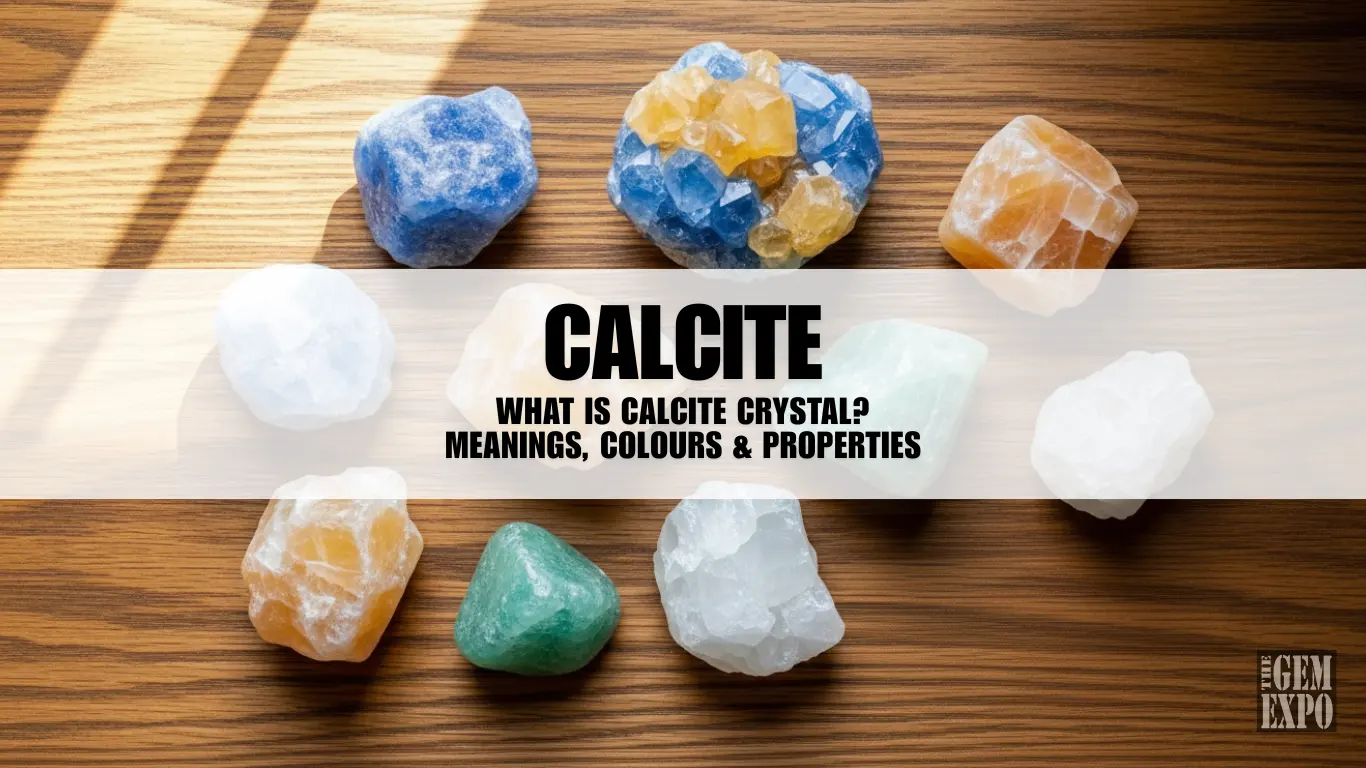

Picture this: you are walking through The Gem Expo in Toronto, and a vendor places a smooth, honey-coloured stone in your palm. It feels almost soapy, surprisingly light, and strangely calming within seconds. You ask what it is. “Calcite crystal,” they say. You have heard the name before, but standing there holding it, you realise you do not actually know what makes it special or why serious collectors keep returning to it, show after show.
After years of bringing together Canada’s most knowledgeable gem vendors, mineral specialists, and certified gemologists under one roof at the Hyatt Regency Toronto, The Gem Expo team has answered thousands of questions about calcite from complete beginners and seasoned collectors alike. What follows is everything you genuinely need to know.
What Is Calcite Crystal?
Calcite crystal is a naturally occurring calcium carbonate mineral (CaCO3) that forms in trigonal crystal systems and ranks 3 on the Mohs hardness scale. It is one of the most abundant minerals on Earth, making up the primary structure of limestone, marble, chalk, and cave formations, including stalactites and stalagmites. The name derives from the Latin word calx, meaning lime. Humans have worked with this mineral for thousands of years, from the white limestone casing of the Great Pyramid of Giza to the crystal healing and collecting practices widespread across Canada today.
In its pure state, calcite is colourless and transparent. Trace minerals entering the crystal during geological formation give each variety its distinctive colour. Iron produces orange and yellow tones. Manganese creates pink and rose hues. Copper introduces blue. Chlorite brings green. This is why calcite appears in more colour varieties than almost any other common mineral, each carrying a unique formation story unfolded over millions of years.
Perhaps its most remarkable physical property is double refraction. When a transparent specimen is placed over printed text, the letters appear duplicated because the stone splits incoming light into two separate rays. This optical phenomenon is why clear calcite was historically called Iceland Spar and was reportedly used by Viking navigators to locate the sun through heavy cloud cover.
Calcite Crystal: Quick Reference
| Property | Detail |
|---|---|
| Chemical formula | CaCO3 |
| Crystal system | Trigonal |
| Mohs hardness | 3 |
| Cleavage | Perfect rhombohedral |
| Notable optical property | Double refraction |
| Chakra associations | All chakras depending on colour |
The Meaning of Calcite Crystal
Within metaphysical and healing traditions, calcite crystal carries a core meaning centred on amplification, renewal, and energetic clearing. Crystal healing practitioners widely describe it as the stone of amplification because it accelerates whatever energy is already present, clears what no longer serves, and creates conditions for growth and fresh starts.
Unlike stones associated primarily with grounding or protection, calcite is understood to move energy. This amplifying quality explains why calcite appears so frequently in the collections of people navigating significant life transitions, whether a career change, an emotional healing process, or a creative reinvention. Placed alongside other crystals during meditation or energy work, calcite enhances the properties of neighbouring stones rather than competing with them. Grounding stones in particular pair exceptionally well with calcite for this reason, if you are building a complementary crystal pairing, understanding What Is Bloodstone? Meaning, History & Healing is a natural next step, as bloodstone’s deep grounding and protective energy creates a meaningful contrast to calcite’s amplifying, moving quality. This collaborative dynamic is something experienced practitioners across Canada seek out deliberately when assembling crystal collections and healing layouts.
Calcite Colours, Chakras, and Healing Properties
Colour determines chakra alignment and healing focus in calcite. The variety you choose should reflect your current intention.
| Calcite Colour | Associated Chakra | Primary Healing Properties | Best Used For |
|---|---|---|---|
| Blue Calcite | Throat and Third Eye | Communication, anxiety relief, mental clarity | Self-expression, reducing overwhelm |
| Orange Calcite | Sacral | Creativity, emotional balance, vitality | Creative blocks, low motivation |
| Yellow Calcite | Solar Plexus | Self-worth, mental focus, relaxation | Study, confidence building |
| Honey Calcite | Solar Plexus and Crown | Personal power, leadership, focus | Decision-making, spiritual awareness |
| Green Calcite | Heart | Emotional release, compassion, abundance | Healing resentment, gratitude |
| Pink or Mangano Calcite | Heart | Self-love, trauma healing, gentle comfort | Grief, heartbreak, emotional safety |
| Red Calcite | Root | Grounding, vitality, boundary setting | Fatigue, feeling ungrounded |
| White or Clear Calcite | Crown and All Chakras | Purification, clarity, spiritual connection | Cleansing spaces, amplifying other stones |
Three varieties deserve closer examination because they are most frequently encountered at Canadian gem shows and most often misunderstood by new collectors.
Blue calcite is among the most consistently popular varieties at The Gem Expo vendor tables. Its throat chakra connection directly supports anyone who struggles with self-expression, whether in professional settings, personal relationships, or creative work. Many visitors who handle blue calcite in person for the first time comment on how immediately soothing it feels compared to its appearance in photographs. The soft blue-grey colour comes from oxidised copper impurities within the crystal matrix.
Orange calcite is the variety most associated with creative renewal. Its sacral chakra connection makes it effective for prolonged motivation blocks, emotional flatness, and disconnection from joy. Artists, writers, and musicians across Canada’s creative industries keep orange calcite on their desks and in their studios for this reason.
Mangano calcite is one of the most frequently mislabelled stones in the crystal market. True mangano calcite must contain a minimum of 30 per cent manganese by composition, which gives it a soft translucent pale pink colour and causes it to emit a bright pink glow under ultraviolet light. Many pink calcite specimens are sold as mangano without meeting this threshold. At The Gem Expo, vendors who specialise in pink and mangano calcite can demonstrate the UV difference between the two varieties in person, the kind of hands-on expertise that separates reputable shows from anonymous online listings.
How to Work with Calcite Crystal
In meditation, hold a piece in your non-dominant hand and establish a clear, specific intention before you begin. Because calcite amplifies whatever energy you bring to a session, clarity of purpose matters more than duration. Blue and honey calcite are particularly well-suited to meditative states, supporting mental clarity and intuitive focus, respectively.
In your living and working space, placement follows colour-chakra logic. Orange calcite in a home office supports creative flow and counters stagnant energy. Green calcite in shared living areas encourages emotional ease and open communication. White calcite near an entryway refreshes the atmosphere circulating through your home.
As jewellery or a carried stone, keep hardness in mind. At Mohs 3, calcite is not suited to rings or daily-wear bracelets where constant friction will damage the surface. It performs beautifully as a pendant, earrings, or a tumbled pocket stone carried throughout the day.
How to Care for Your Calcite
Physical cleaning
should use a dry or very lightly dampened soft cloth only. Do not soak calcite in water for extended periods, as prolonged moisture dulls the surface polish. Salt water, chemical cleaners, and ultrasonic devices should never be used.
Energetic cleansing
is most safely done with moonlight. Place your calcite on an indoor windowsill overnight during any phase of the lunar cycle. Sound cleansing with singing bowls or tuning forks is equally effective and risk-free. Avoid prolonged direct sunlight, which gradually fades the colour in blue, pink, and mangano specimens.
Storage
should separate calcite from harder stones. A soft fabric pouch or cloth-lined tray prevents the surface scratches that accumulate when minerals of different hardness share the same space. Calcite’s Mohs 3 rating makes it particularly vulnerable when stored alongside carbonate minerals that appear visually similar but carry a slightly different hardness profile. Aragonite is one such mineral. It shares the same chemical formula as calcite (CaCO3), yet forms under different geological conditions and behaves differently in storage and care. If you keep both in your collection, Aragonite Crystal Explained – Real Science, Meaning & Care walks through exactly how to distinguish and care for each, so neither stone is damaged over time.
How to Choose the Right Calcite for You
Anchor your choice in a specific current need. If creative blocks or emotional flatness are the primary challenge, start with orange calcite. If anxiety or communication difficulty is central, blue calcite is the natural choice. If you are processing grief or emotional trauma, mangano or pink calcite offers the gentlest available energy in the calcite family. For a general amplifier for your practice or home environment, white or honey calcite is consistently reliable.
The most dependable way to find a piece that genuinely resonates is to handle specimens in person. Photographs convey colour but not weight, temperature, or surface texture. This is a consistent reason The Gem Expo draws thousands of collectors and practitioners to its Toronto shows three times each year. Being surrounded by authentic specimens from vetted vendors who can discuss sourcing, geological origin, and mineral composition directly is an experience no online platform replicates.
FAQs
Is calcite crystal the same as quartz?
No, calcite crystal and quartz are two entirely different minerals. Calcite is calcium carbonate (CaCO3) with a Mohs hardness of 3, while quartz is silicon dioxide (SiO2) with a hardness of 7. The easiest way to tell them apart at home is the acid test: a drop of vinegar on genuine calcite produces visible fizzing and bubbling due to the carbonate reaction, while quartz shows no response at all. Visually, calcite also feels slightly soapy and displays double refraction in its transparent form, neither of which quartz demonstrates.
Can calcite crystal go in water?
Calcite crystal should not be soaked in water. While brief contact will not cause immediate damage, prolonged water exposure gradually dulls the surface polish and can cause deterioration in softer specimens over time. Salt water and acidic liquids are particularly damaging because calcite reacts with acids, including the mild acidity of lemon juice or vinegar, which will visibly etch the surface. For energetic cleansing, moonlight or sound cleansing with a singing bowl are the safest alternatives.
What zodiac sign is calcite crystal associated with?
Calcite crystal is most commonly associated with Cancer, the water sign ruled by the moon. The connection is fitting given calcite's geological origins on ancient ocean floors and its emotionally supportive, nurturing energy. Specific colour varieties carry additional zodiac associations: blue calcite resonates with Aquarius and Pisces, honey and yellow calcite align with Leo, and pink or mangano calcite connects particularly well with Taurus and Libra.
How can you tell if calcite crystal is real or fake?
Three quick tests identify genuine calcite crystal. First, press a copper coin firmly against a hidden edge or base surface. Real calcite scratches easily at Mohs 3, while glass, resin, or harder imitations will not. Second, apply a small drop of white vinegar to an inconspicuous area. Authentic calcite fizzes noticeably due to its carbonate composition reacting with the mild acid. Third, examine the colour under natural light. Genuine calcite typically shows natural banding, subtle tonal variation, or slight cloudiness. Perfectly uniform, deeply saturated colour is a reliable indicator of artificial dye treatment.
What is the rarest colour of calcite crystal?
Among the varieties commonly available to collectors, deep cobalt blue calcite and raspberry red calcite are considered the rarest and most sought-after. True cobalt blue calcite, which gets its colour from genuine copper impurities rather than dye treatment, is significantly harder to source than the more common pale blue variety. Red calcite with strong, saturated colour is also relatively uncommon compared to orange, yellow, and white varieties. At gem shows like The Gem Expo in Toronto, rare colour specimens attract experienced collectors specifically for this reason, and they typically sell faster than any other variety at vendor tables.
A Note on Authenticity
Artificial dyeing is common in the calcite market, particularly in orange and blue varieties. Authentic specimens show natural colour banding or slight internal cloudiness rather than perfectly uniform, saturated colour. It scratches easily with a copper coin and feels cool and heavier than plastic or resin imitations. Under ultraviolet light, wide varieties fluoresce distinctively, with genuine mangano calcite producing its characteristic bright pink glow.
Purchasing from vetted vendors at a reputable show gives you direct access to sourcing information and on-the-spot testing. Transparency about what a stone is and where it came from has been a founding principle at The Gem Expo since establishing Toronto’s premier gem and mineral community. The vendors who return season after season do so because that standard of honest dealing is what keeps knowledgeable collectors coming back.
Calcite crystal has been part of human experience for millennia, from the monumental architecture of ancient Egypt to the thriving collecting and healing communities across Canada today. Its geological abundance makes it accessible at every level. Its extraordinary range of colours makes it endlessly worth exploring. Its genuine energetic versatility makes it one of the most rewarding minerals to live with and work with over time.