
I still remember the first time I held a rough, unpolished stone at a small gem show table and had no idea what I was touching. The vendor smiled and said, “That’s just quartz, but wait until you see what it can become.” She was right. That plain-looking rock turned into everything from jewellery to home décor once it was cut and finished. If you have ever wondered why a simple quartz crystal shows up everywhere from rings to meditation shelves, you are about to find out, and if you want to see real specimens up close, The Gem Expo is happening November 27 to 29 at the Hyatt Regency Toronto, so keep that date in mind as you read.
What Is A Quartz Crystal, Really?
At its core, quartz is one of the most common minerals on Earth. It forms deep underground when heat and pressure work together over thousands of years, growing into six-sided points that look almost too perfect to be natural. The quartz crystal you see in shops today started as this slow, patient process, which is part of why people find it so grounding to hold. In plain terms, the quartz meaning boils down to structure and clarity: it is silicon and oxygen locked into a tidy crystal lattice, and that tidy structure is exactly what gives it strength and, for many collectors, a calm and steady feel.
A basic quartz rock can look plain grey or white before it is cleaned and cut, which surprises a lot of first-time buyers who expect shine right out of the ground. If you like learning how one mineral family branches into many different stones, our guide on agate stone is a good next stop, since agate and quartz share a family tree.
The Many Faces Of Quartz Crystal
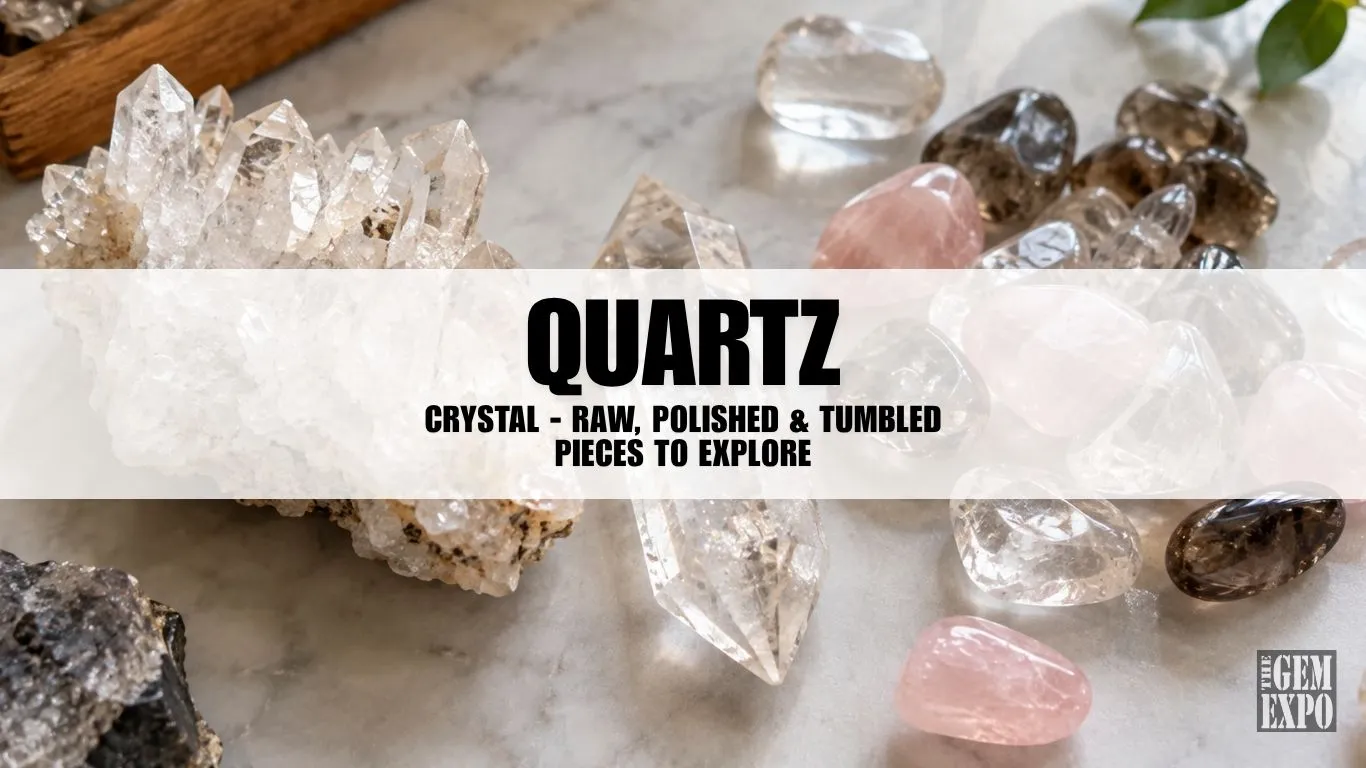
Here is something that trips people up: quartz is not just one look. It is a whole family, and each member has its own colour, its own story, and its own fans. Clear quartz is the classic, transparent point most people picture. Smoky crystal quartz gets its brownish-grey tone from natural radiation in the earth, which sounds dramatic but is completely safe to keep at home. Black quartz, often called morion, is the darkest member of the family and tends to appeal to collectors who like bold pieces. Green quartz and pink quartz sit on the softer end of the spectrum, and pink quartz crystal in particular is one of the most requested colours at any gem show table.
Every quartz crystal in this wider family starts from the same base mineral, which is exactly what makes them so satisfying to collect as a set. Two of quartz’s most famous cousins, amethyst and citrine, are technically the same mineral wearing different colours. If purple stones catch your eye, our amethyst crystal guide breaks down why that colour forms and how it compares to other family members.
If you are drawn to warmer tones instead, the citrine crystal page covers that sunny yellow variety in detail. Understanding crystals and quartz as one connected family makes shopping a lot easier, because once you know the pattern, you start spotting it everywhere.
Rose Quartz: The Heart Of The Collection
No conversation about quartz crystal varieties is complete without rose quartz. Ask any long-time collector about rose quartz meaning and they will likely mention love, comfort, and emotional balance before they mention anything else. The definition of rose quartz, in simple terms, is a pale to medium pink variety of quartz that gets its blush colour from tiny traces of titanium or manganese trapped inside. Whether someone wants quartz, rose quartz specimens for a gift or their own shelf, this stone tends to be the first one recommended to beginners because it feels approachable rather than intimidating.
The significance of rose quartz goes back centuries. Ancient civilizations used it in beauty rituals and burial items, and today it still shows up in skincare tools and jewellery for the same soft, calming reputation. People often ask about the benefits of pink quartz, and while nobody can promise medical results, plenty of buyers say holding a rose quartz crystal during a stressful moment simply helps them slow down and breathe. If you enjoy stones with a similar gentle, heart-centred reputation, our moonstone crystals feature is worth a look, since the two are often paired together on altars and nightstands.
A Simple Step-By-Step Guide To Choosing Your First Piece
Picking your first quartz crystal does not need to be complicated. Here is a short, practical path that most first-time buyers are guided through at a show or shop.
- Decide on purpose first. Are you drawn to décor, jewellery, or something to hold during quiet moments? This narrows the shape you need, whether that is a polished point, a tumbled stone, or a raw cluster.
- Pick a colour that speaks to you. Whether it is a classic clear point, a soft pink quartz crystal, or a deeper smoky tone, personal preference matters more than any chart.
- Check the finish. Raw pieces keep their natural rough edges, polished pieces are smoothed and shiny, and tumbled pieces are rounded and pocket-friendly.
- Ask about the source. Reputable sellers are usually happy to share where a piece was mined, and this is a great way to learn as you shop.
- Cleanse it once you bring it home. Many collectors rinse new pieces under cool water or leave them near a window overnight before using them regularly.
For that last step, some people prefer grounding stones alongside their quartz, and our hematite benefits article explains why that pairing is popular among beginners.
Others like softer cleansing companions instead, and the howlite crystal guide covers a gentle option that new collectors tend to enjoy.
See It In Person Before You Decide
Photos only tell half the story with any quartz crystal, because colour, clarity, and weight are much easier to judge in person. This is exactly why so many Ontario collectors plan their shopping around The Gem Expo rather than buying blind online. At the show, dozens of independent sellers set up tables side by side, so you can compare a pale pink quartz next to a rich green quartz piece within minutes, ask questions directly, and walk away knowing exactly what you paid for. If a weekend trip to browse real specimens sounds appealing, mark your calendar now, because the doors open soon and tables tend to fill up with regular visitors early.
According to mineralogical references such as the International Gem Society, quartz sits at a 7 on the Mohs hardness scale, which explains why it holds up so well in daily-wear jewellery compared to softer stones. That durability is one more reason quartz has stayed popular across so many cultures and centuries.
A Quick Colour Reference
| Quartz Variety | Common Colour | Popular Use |
|---|---|---|
| Clear Quartz | Colourless | Meditation points, jewellery |
| Rose Quartz | Soft pink | Heart-centred jewellery, décor |
| Smoky Quartz | Brown to grey | Grounding pieces, pendants |
| Black Quartz (Morion) | Deep black to brown-black | Statement rings, collector pieces |
| Green Quartz | Pale to medium green | Beaded jewellery, home accents |
| Citrine | Yellow to golden | Rings, bracelets |
Browsing a chart like this is helpful for narrowing down which quartz crystal suits you, but nothing replaces holding a piece and seeing how the light moves through it. If lighter blue tones interest you more than pink or green, our lapis lazuli overview is another crowd favourite worth reading before your visit.
FAQs
How can you tell if a quartz crystal is real or fake?
Genuine quartz crystal feels cool to the touch and warms up slowly in your hand, while glass or plastic imitations warm up almost instantly. Real pieces also show natural inclusions, slight colour variation, and sometimes tiny fractures inside. Perfectly flawless, bubble-free, uniformly coloured pieces are usually manufactured glass rather than natural stone.
How much does a quartz crystal usually cost?
Small tumbled or raw pieces typically run a few dollars, while larger polished points, clusters, or rare colour varieties can cost significantly more. Price depends on size, clarity, colour, and origin. Buying in person at a show lets you compare several pieces side by side before deciding what fits your budget.
Can you get quartz crystal wet, or does water damage it?
Most quartz crystal can safely handle a quick rinse under cool water since it sits at 7 on the Mohs hardness scale. However, pieces with metal settings, glued clusters, or fragile points should avoid prolonged soaking, as water can loosen adhesives or cause metal parts to tarnish over time.
Where does most quartz crystal actually come from?
Quartz forms all over the world, with major sources in Brazil, Madagascar, and the United States, particularly Arkansas. Canada also has notable deposits, especially in Ontario and Quebec. Vendors at gem shows often source directly from these regions, which is why asking about origin is a smart step when buying.
Do quartz crystals need to be recharged, and how often?
Some collectors believe quartz benefits from occasional recharging under moonlight or sunlight to refresh its energy, usually once every few weeks or after heavy use. This is a personal practice rather than a scientific requirement, so there is no fixed rule. Many owners simply recharge whenever the stone feels right to them.
Bringing It All Together
A quartz crystal is never just one thing. It is clear points and smoky towers, soft pink quartz and bold black quartz, a family that has fascinated collectors for generations and still fills tables at every gem show across the country. Whether you are chasing the significance of rose quartz for a gift, comparing a pink quartz crystal against a green one, or simply want to touch a genuine quartz rock before buying, the best next step is seeing the real thing.
The Gem Expo returns November 27 to 29 at the Hyatt Regency Toronto, with independent sellers bringing raw, polished, and tumbled pieces from across Canada and beyond. Browse our full gemstone blog for more stone guides before you go.
Curious who will actually be at the tables this time? Check the vendor lineup ahead of your visit so you know exactly which sellers to look for.
Ticket prices, hours, and future dates are all confirmed on our show hours and future dates page. Come see, touch, and choose your own piece of quartz crystal history in person this November.