
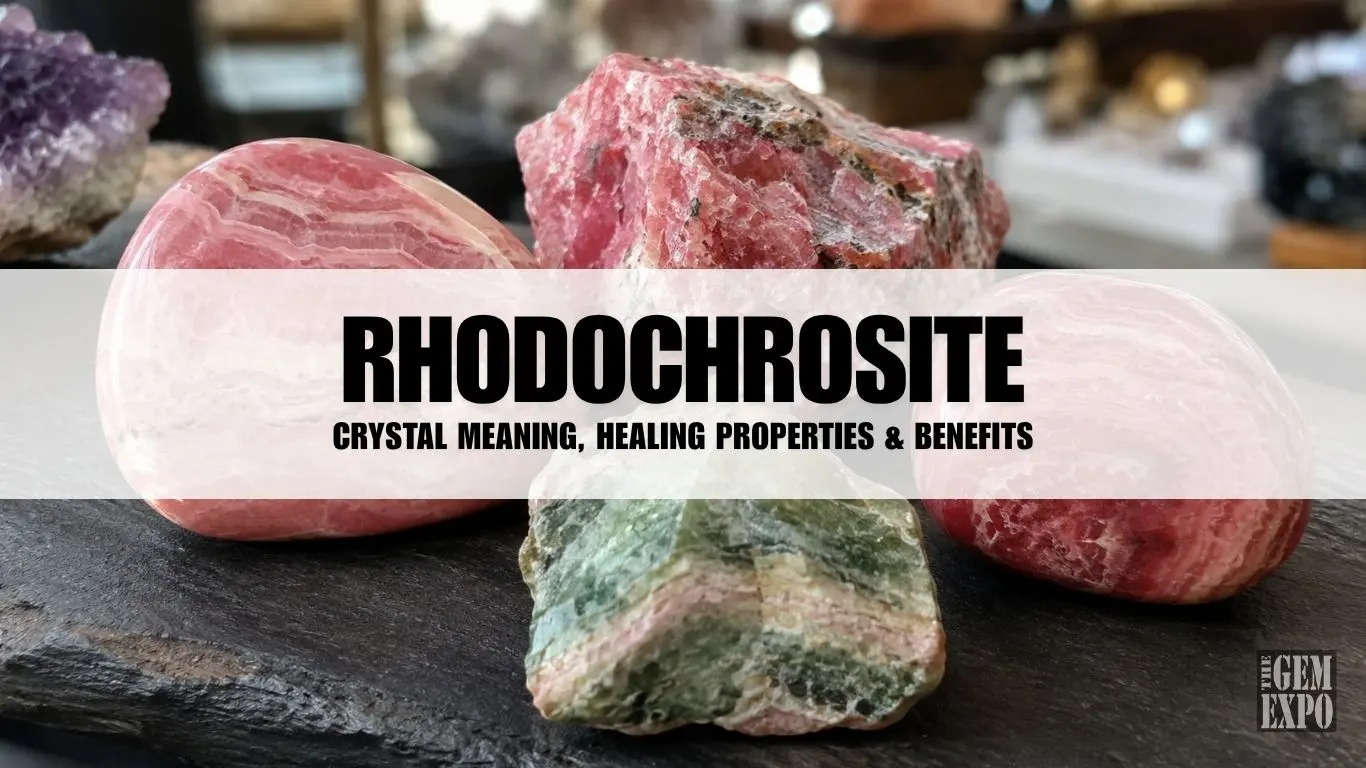

Picture a stone that looks like it was carved from a slice of sunrise, soft pink swirled with cream, sometimes streaked with deep rose red. That is what most people see the first time they hold a Rhodochrosite Crystal, and it is usually the moment they stop and ask what it actually is. This stone has quietly become one of the most loved pink crystals in Canada, not just for how it looks but for what it does for the heart.
If you want to see one in person before you commit, The Gem Expo brings rhodochrosite and dozens of other crystals to Toronto three times a year, with the next show running November 27 to 29 at the Hyatt Regency Toronto. Keep reading, because knowing what to look for will make that visit far more rewarding.
What Is Rhodochrosite?
Rhodochrosite is a manganese carbonate mineral, and it forms in bands or clusters that range from pale blush pink to rich rose red. The mineral rhodochrosite is usually discovered near silver and manganese deposits, which is part of why it often turns up alongside metallic-looking specimens. In its rough state, natural rhodochrosite can look almost like striped candy, with each band marking a different stage of its slow underground formation.
A Rhodochrosite Crystal does not grow the same way everywhere. Some pieces from Argentina show tight, ribbon-like bands, while rhodochrosite rock from Colorado forms sharp, glassy points, and either type of rhodochrosite rock can look quite different depending on where it grew. As a mineral, rhodochrosite is fairly soft, so it needs gentle handling, and that softness is one of the easiest ways to tell it apart from harder pink stones.
Rhodochrosite Meaning and Symbolism
The rhodochrosite meaning that most people connect with is love, plain and simple, though not only romantic love. It is tied to self-acceptance, forgiveness, and the quiet compassion people show themselves after a hard season of life. In many crystal traditions, this pink rhodochrosite meaning is described as an invitation to release old pain rather than carry it forward.
Meaning Rhodochrosite Crystal In Short: it is often called the stone of the compassionate heart, chosen by people working through grief, low self-worth, or the aftermath of a difficult relationship.
There is a story often shared among collectors about a woman who picked up her first piece of rhodochrosite at a gem show shortly after a divorce, looking for something pretty rather than anything spiritual. A year later, she credited that small pink stone with reminding her, every time she saw it on her desk, that healing does not happen all at once. Whether a stone can truly do that is a matter of personal belief, but the meaning rhodochrosite carries for people going through change is real to them, and that pink rhodochrosite meaning is exactly why so many first-time buyers choose it. That, in the end, is the meaning rhodochrosite crystal fans keep coming back to.
Rhodochrosite Healing Properties
The rhodochrosite healing properties most often mentioned involve the heart chakra and, to a lesser extent, the solar plexus. It is said to be worn or carried when someone wants to feel more open, more forgiving, or simply calmer in emotionally heavy situations. Many of the healing properties of rhodochrosite are described as gentle rather than intense, which is why it is considered approachable even for people who are new to crystal work.
If hematite is chosen for grounding, rhodochrosite is usually chosen for the opposite job: opening up feeling rather than settling it down. Some people pair the two together on purpose, one stone to hold them steady and one to help them feel. In short, the healing properties of rhodochrosite tend to work best alongside a grounding stone rather than on their own.
Pink, Red, Green and Blue Rhodochrosite: Colors Explained
Not every piece looks the same, and color changes both the price and the meaning people assign to a stone.
| Color Variety | What It Looks Like | Where It’s Typically Found | Common Association |
|---|---|---|---|
| Pink rhodochrosite | Soft, milky pink, often banded | Argentina, Peru | Self-love, gentle healing |
| Red rhodochrosite | Deep rose to cherry red, more transparent | Colorado, USA | Passion, emotional courage |
| Green rhodochrosite | Rare, caused by trace mineral mixing | Occasional specimen finds | Renewal, less common in jewelry |
| Blue rhodochrosite | Extremely rare, often confused with other blue minerals | Very limited localities | Novelty collector pieces |
A pink rhodochrosite crystal is by far the most common on the market, and it is what most people picture when they hear the name. A pink stone rhodochrosite piece with clear, visible banding is usually considered more desirable than a plain, cloudy chunk. Red rhodochrosite tends to sell higher than everyday pink pieces because true gem clarity in that shade is rare, and green rhodochrosite is harder still, with most green rhodochrosite specimens surfacing only at specialty mineral shows. Blue rhodochrosite is unusual enough that buyers should ask for proof of origin before paying a premium, since misidentification happens often in this rare color range.
Raw vs Polished Rhodochrosite: Which One Should You Choose?
This comes down to personal taste more than anything else. Raw rhodochrosite keeps its natural, unfinished surface, and many collectors prefer it because it shows exactly how the stone formed underground. A raw rhodochrosite crystal feels more authentic on a shelf, and a raw rhodochrosite crystal with strong banding often photographs just as well as a polished one.
Polished rhodochrosite, by contrast, is cut and buffed until the banding really pops under light, which is why it is the style most often used in jewelry. When shoppers ask about gem quality rhodochrosite, they usually mean transparent, richly colored pieces that could be faceted rather than just tumbled, and gem quality rhodochrosite this fine rarely turns up outside specialist collections. High quality rhodochrosite is far less common and priced accordingly, so it helps to ask a vendor why one high quality rhodochrosite specimen costs more than another at a show like The Gem Expo.
Rhodochrosite vs Rhodonite: How to Tell Them Apart
These two stones get confused constantly because they share a pink to rose color range and even part of their name, even though the mineral rhodochrosite and rhodonite are chemically unrelated. The comparison of rhodochrosite vs rhodonite usually comes down to three quick checks.
| Feature | Rhodochrosite | Rhodonite |
|---|---|---|
| Hardness | Softer, around 3.5–4 on the Mohs scale | Harder, around 5.5–6.5 |
| Banding | Concentric, ring-like bands | Black veining, not banded |
| Composition | Manganese carbonate | Manganese silicate |
If a stone has black, vein-like streaks running through it, that is almost always rhodonite, not rhodochrosite. According to Mindat’s mineral database, an independent, non-commercial reference used by geologists and collectors worldwide, the two minerals are chemically distinct despite looking similar at a glance, and that difference is exactly what causes the scratch test to work so reliably.
Real vs Fake Rhodochrosite: Simple Checks Before You Buy
Because it is popular and relatively soft, this stone is sometimes dyed or reconstructed and sold as the real thing. Anyone learning to spot real vs fake rhodochrosite should look for a few warning signs: colors that look too uniform and perfectly saturated, banding that repeats in an unnaturally regular pattern, or a price that seems far too low for the size of the piece.
A trusted seller should always be able to tell you where a specimen was mined. A genuine pink stone rhodochrosite should never look plastic-perfect under a bright light, since real banding has small irregularities that dye jobs rarely copy well. If you plan to buy rhodochrosite for a collection rather than casual jewelry, ask to see it under natural light, since dye jobs often look slightly off compared to daylight photos.
This is exactly the kind of detail that gets lost when shopping online, and it is one more reason an in-person show works better for serious buyers who want to buy rhodochrosite with confidence. The Gem Expo’s Toronto event lets you compare several vendors’ natural rhodochrosite side by side, ask questions directly, and walk away knowing precisely what you purchased.
How to Use a Rhodochrosite Crystal: Step by Step
Working with any new stone is easier with a simple routine rather than guesswork.
- Cleanse it first. A new pink rhodochrosite crystal picks up energy from everyone who has handled it, so many people rinse it briefly under cool water or leave it near moonstone overnight to reset.
- Set a clear intention. Hold the stone and name, out loud or silently, what you want help with, whether that is self-forgiveness or simply calming down after a stressful week.
- Keep it close. Wear it as jewelry, carry it in a pocket, or place it near your bed if the goal is emotional rest rather than daily energy.
- Pair it thoughtfully. Some people add lapis lazuli for clarity, since a second stone can support the first one without competing with it.
- Revisit it regularly. Every few weeks, take a moment to notice whether the intention still fits, and adjust it if your needs have changed.
Some collectors also like to rotate their pink stones with something more transformative, such as labradorite, especially during a season of bigger life changes.
FAQs
Is it safe to wear rhodochrosite jewelry every day?
Rhodochrosite sits around 3.5–4 on the Mohs hardness scale, which makes it softer than quartz or amethyst. It can be worn daily in rings or pendants, but it scratches more easily than harder stones, so it should be removed before workouts, cleaning, or heavy manual tasks. Rings see more wear than earrings or pendants, so those need extra care.
Can rhodochrosite get wet, or should it be kept dry?
Brief contact with water is fine, but rhodochrosite should not soak for long periods or sit in hot water, since it can dull the polish and weaken banded layers over time. Sweat, lotion, and perfume should also be wiped off after wear. A soft cloth and mild soap work best; avoid ultrasonic cleaners entirely.
What zodiac sign or birthstone is rhodochrosite linked to?
Rhodochrosite is not an official modern birthstone, but it is commonly associated with Leo and Scorpio in crystal astrology, valued for supporting confidence and emotional depth in both signs. Some also connect it to October birthdays because of its rose-red tones, though it is not part of the traditional birthstone list.
Why does Argentina rhodochrosite cost more than other origins?
Argentina's Capillitas mine produces the tightest, most vividly banded stalactite formations in the world, which is what most buyers picture when they think of rhodochrosite. Colorado and South African material is often more transparent but smaller and rarer. Argentine pieces balance size, pattern clarity, and consistent supply, which keeps demand and pricing higher than most other sources.
How much does a rhodochrosite crystal typically cost?
Small tumbled stones can start under 15 dollars, while banded slabs and polished specimens usually range from 20 to 150 dollars depending on size and pattern quality. Transparent, gem-grade faceted pieces from Colorado can run into the hundreds or thousands. Size, clarity, banding definition, and country of origin are the main price drivers.
Where to Find Genuine Rhodochrosite in Canada
Online listings can be convenient, but nothing replaces seeing a stone in person before it becomes part of your collection. That is exactly the gap The Gem Expo was built to fill, bringing trusted, vetted vendors together under one roof so shoppers are not left guessing. The full show schedule lists every upcoming date, with the next event happening November 27 to 29 at the Hyatt Regency Toronto.
Between browsing rhodochrosite and chatting with vendors who specialize in manganese carbonate minerals, a single visit tends to teach more than hours of scrolling ever could. Many shoppers also leave with a small extra piece, such as a sunny citrine for the same shelf.
A grounding stone like black onyx is another popular pairing for anyone who wants a calmer, steadier feeling alongside the rhodochrosite.
If a soft pink stone with a gentle, heart-centered story has caught your attention, this is your sign to come see one for yourself, hold it, compare a few pieces, and pick the one that actually speaks to you.