

A woman once walked into a gem show in Toronto holding her late grandmother’s ring in a small velvet pouch. She had no idea if the deep ruby red stone inside it was real. Twenty minutes later, a vendor held it under a loupe, smiled, and said, “This is a proper ruby, and it’s older than you think.” That is the moment ruby jewellery stops being a Google search and becomes something personal. If you have ever wondered whether the piece you own, or the one you are about to buy, is worth the price tag, this guide walks you through it in plain, simple language.
Before you scroll past this thinking it is just another sales page, know this: good ruby jewellery is judged the same way gemologists judge it, not by marketing words. We will cover what makes a ruby a ruby, how to tell a good one from a weak one, and where in Canada you can actually hold one in your hand before you buy it. If you are shopping for yourself or picking out a ruby proposal ring, keep reading, because the next few sections could save you from an expensive mistake.
What Makes a Ruby a Ruby?
A ruby is not its own separate mineral. It belongs to a mineral family called corundum, the same family that gives us blue sapphires. What separates a ruby from a sapphire is colour and colour alone. When trace amounts of chromium slip into the crystal structure as it forms underground, the stone turns red instead of blue. That is the entire secret behind ruby jewellery, and it is also why fine rubies are often rarer, and pricier, than similarly sized sapphires. This same family logic shows up across the gem world, since the soft glow of moonstone comes from light bouncing between thin feldspar layers rather than any colour additive at all.
Ruby Colouring: Why This Stone Glows Red
The ruby colouring people fall in love with ranges from a bright pinkish red to a deep, almost blood-like tone that gem traders call “pigeon’s blood.” That richer end of the scale is the most prized and the most expensive. When people describe ruby red, the colour that jewellery lovers chase, they are usually picturing that vivid, slightly warm shade rather than a brownish or purplish version. If you are curious how other stones get their signature shades, the cool green tones of emerald come from a completely different trace element paired with a different host mineral entirely.
Ruby Birthstone Meaning and Why July Babies Love It
Ruby is the official ruby birthstone for July, and it has held that title for a very long time. Ancient traders along the Silk Road treated rubies as protective stones for warriors, and that story still shows up in how the gem is marketed today: courage, passion, and vitality. Whether or not you buy into the symbolism, the ruby birthstone tradition is one reason demand spikes every July, and why so many people search for a piece the month before a birthday. It sits alongside other monthly birthstones like the golden warmth of citrine, which claims November.
Types of Ruby Jewellery You Can Wear Every Day
Not every piece of ruby jewellery is built for the same moment. Some are meant for daily wear, others for once-in-a-lifetime occasions.
A ruby ring is the most requested style, and for good reason. A small ring of ruby set in white or yellow gold reads as classic without trying too hard. For anyone weighing ruby as engagement ring stone against a traditional diamond, know that rubies rank a 9 on the Mohs hardness scale, just under diamond, so a well-set ruby engagement ring can genuinely be worn for decades. That durability is part of why ruby engagement rings have quietly grown in popularity as an alternative to diamonds, especially for couples who want colour with meaning attached.
If a proposal is coming up, a ruby proposal ring carries its own symbolism, deep love and lasting commitment wrapped into one stone. A ruby necklace, on the other hand, tends to be the gift people choose for anniversaries or milestone birthdays rather than proposals, since a pendant sits closer to the heart, literally. Some buyers prefer beaded styles entirely, the same way a hand-knotted jade bead necklace appeals to people who want texture over a single centre stone.
One vendor at a recent show told a story about a customer who bought a modest ruby ring for herself after a difficult year, just to mark that she had made it through. No proposal, no anniversary, just a promise to herself. That is the part price lists never capture, the reason a piece of ruby jewellery ends up meaning something.
Ruby vs Other Red Gemstones: How to Tell Them Apart
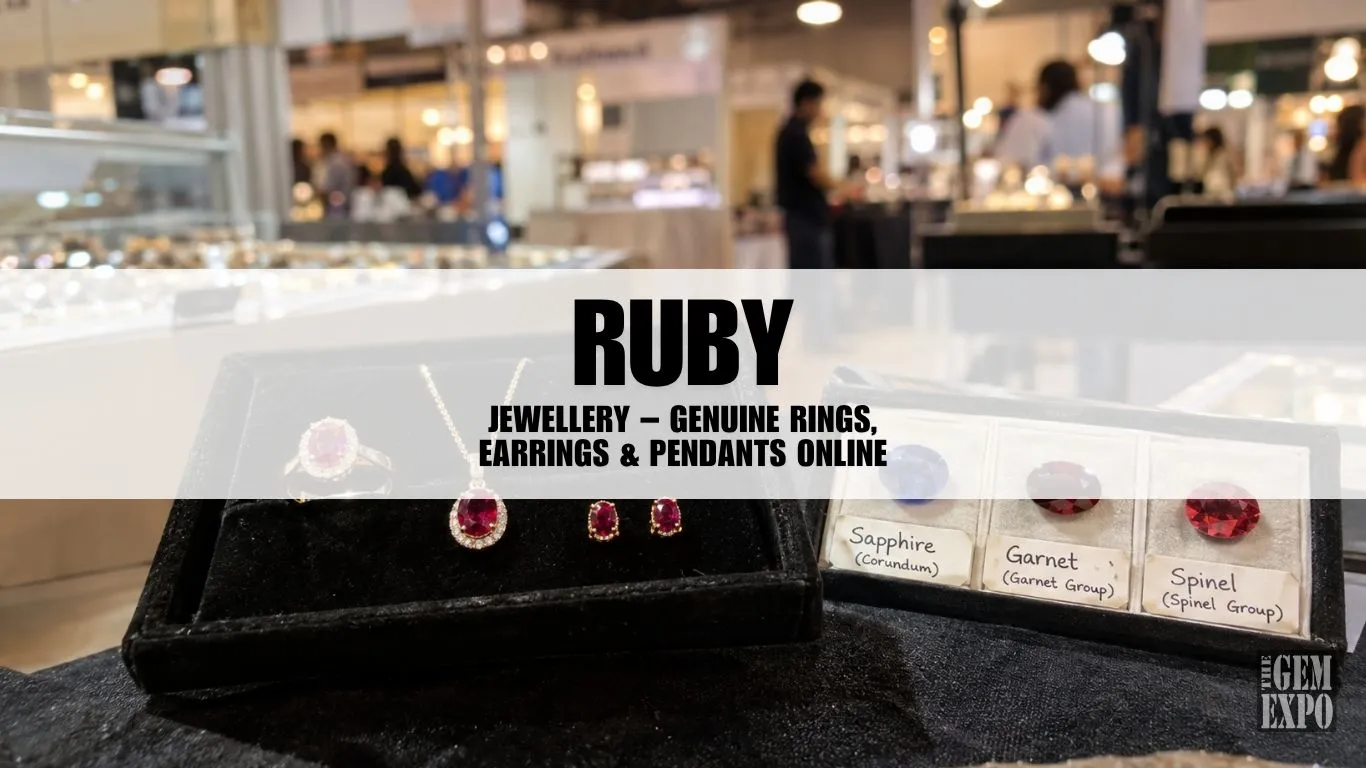
Rubies are not the only red stone on the market, and some sellers blur the lines on purpose. Here is a quick, honest comparison.
| Gemstone | Hardness (Mohs) | Typical Colour | Price Range | Notes |
|---|---|---|---|---|
| Ruby | 9 | Pink-red to deep red | High to very high | Rarer in larger, clean sizes |
| Garnet | 6.5 to 7.5 | Brownish red to deep red | Low to moderate | Softer, more affordable |
| Red Spinel | 8 | Vivid red | Moderate to high | Often mistaken for ruby historically |
| Red Tourmaline | 7 to 7.5 | Pink to red | Moderate | More inclusions visible to the eye |
If a “ruby” is priced far below market rate, ask what it actually is. It is often garnet or glass, not a scam exactly, but a mislabel that costs you later. The same colour confusion sometimes happens with other stones too, which is why the deep blue of lapis lazuli gets confused with dyed howlite in cheaper markets.
How to Choose a Genuine Ruby: A Simple Step-by-Step Guide
You do not need a gemology degree to shop smart. Follow these steps.
- Ask for the certificate. Reputable sellers will provide lab documentation from a recognized gemological lab. The Gemological Institute of America publishes clear standards on how rubies are graded, and it is worth a read before you spend serious money.
- Check the colour under natural light. Ruby colouring should stay vivid outdoors, not just under a jeweller’s warm bulb.
- Look for the setting quality, not just the stone. A loose prong on a ruby engagement ring is a bigger risk than a tiny inclusion in the stone.
- Ask if the stone is heat-treated. Most commercial rubies are heat-treated to improve colour, which is normal and accepted, but untreated stones cost more and should be disclosed either way.
- Compare in person when you can. Photos flatten colour and hide flaws. This is genuinely the step most buyers skip, and it is the one that matters most.
That last step is exactly why events like ours exist. Browsing our full vendor lineup in person beats guessing from a product photo every single time.
Caring for Your Pieces So They Last
An old ring of ruby passed down through a family often needs a proper once-over before it goes back into daily wear, since decades of use can loosen even a well-made setting. Rubies are tough, but they are not indestructible. Clean ruby jewellery with warm water, mild soap, and a soft brush, then dry it fully before storing. Avoid ultrasonic cleaners if the stone has visible fractures, since heat and vibration can widen them over time. Store pieces separately so they do not scratch softer stones nearby, the same care routine that works for aquamarine jewellery or anything set in soft metal.
FAQs
What metal pairs best with ruby jewellery?
White gold and platinum make the red pop with a cool, modern contrast, while yellow gold gives a warmer, more traditional look that many buyers pick for vintage-style rings. Rose gold sits in between and flatters pinkish rubies especially well. There is no wrong choice here, it mostly comes down to your skin tone and whether you want the setting to stand out or fade back.
Is a lab-created ruby the same as a natural one?
Chemically, yes, a lab-created ruby has the same crystal structure and hardness as a natural one. The difference is origin and price. Natural rubies form over millions of years underground and cost far more, while lab-created stones are grown in weeks and sell for a fraction of the cost. Neither is fake, but sellers must disclose which one you are buying.
Does ruby jewellery fade or lose its colour over time?
Genuine rubies do not fade from normal wear, sunlight, or age, since the colour comes from chromium locked inside the crystal itself, not a surface coating. If a piece looks duller after years of wear, it is usually dirt or oil buildup rather than actual colour loss. A gentle clean, as covered earlier, is almost always enough to bring the shine back.
Why is ruby linked to wedding anniversaries?
Ruby is the traditional gemstone for the 40th wedding anniversary in most Western countries, and some traditions also tie it to the 15th. The custom likely grew from the stone's long association with deep, lasting love and passion. It has made ruby jewellery a popular milestone gift for couples marking decades together rather than just an engagement or birthday.
Can ruby jewellery be resized or repaired safely?
Yes, in most cases. Rubies are hard enough to handle standard resizing and prong repairs without damage, as long as a jeweller avoids excessive heat near the stone during the process. The bigger risk is usually the setting metal, not the ruby itself, so it is worth confirming your jeweller has experience working with coloured gemstones before handing over an heirloom piece.
Come See Ruby Jewellery in Person at The Gem Expo
Reading about a stone only gets you so far. The Gem Expo runs three times a year at the Hyatt Regency in downtown Toronto, and the next show lands on November 27 to 29, bringing together dozens of independent jewellers, gemstone dealers, and artisans under one roof.
You will find gemstone jewellery makers like Agape Gemstone Jewelry on the floor, working with rubies, sapphires, and emeralds side by side.
There are also specialists in coloured stone settings such as HG Jewellery, who work closely with lapis and other deep-toned gems and can talk you through what makes one stone worth more than another.
Bring that inherited ring in your pocket if you have one, and let someone who does this daily take a real look at it. Whether you are set on ruby as engagement ring stone, hunting for a ruby ring, a ruby necklace, or just a better sense of what to look for, that kind of hands-on moment is worth more than another hour of scrolling. Come find your piece, ask the vendors questions, and see the stone in real light before you commit to anything.