

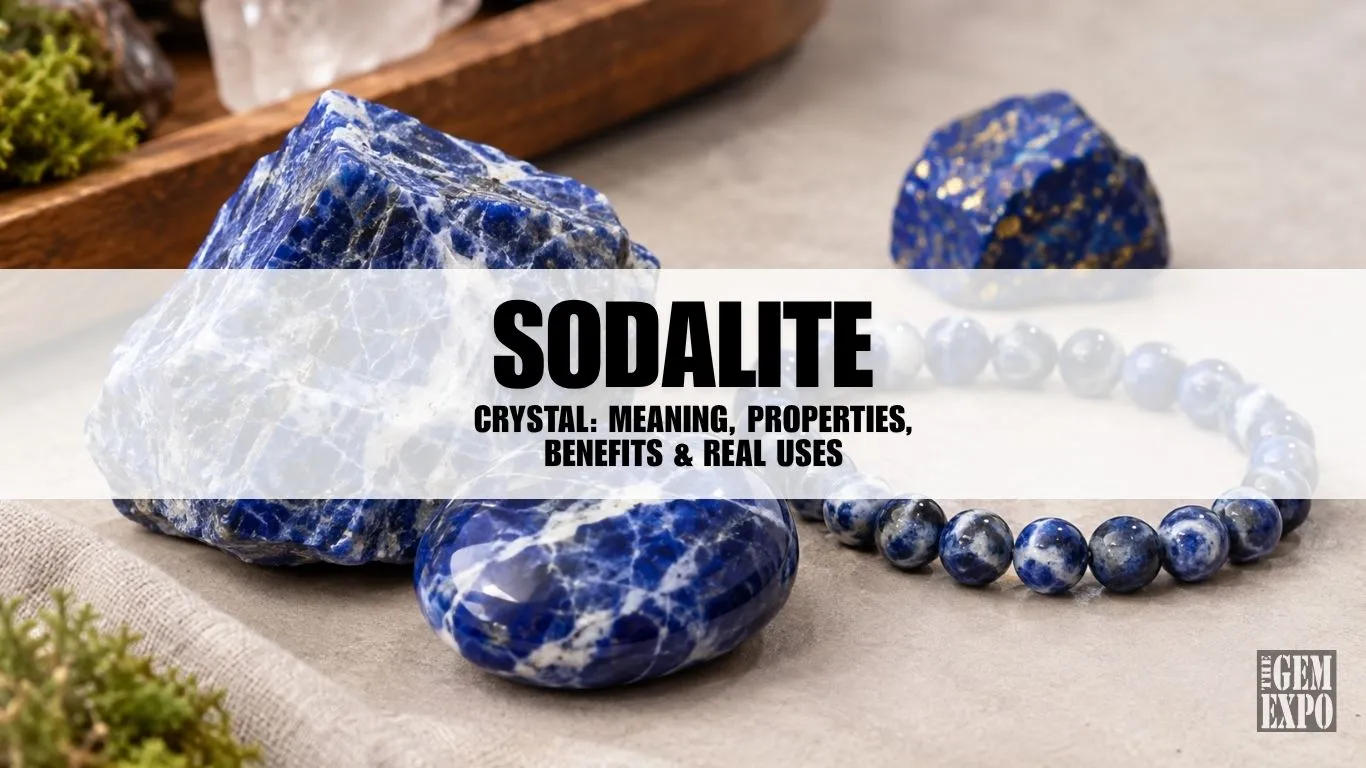

I still remember the first time I held a piece of rough sodalite at a small mineral table in Toronto. It was cold, heavy for its size, and marked with soft white veins running through deep royal blue. The vendor smiled and said, “this one calms the mind before it even touches your skin.” I laughed it off at the time, but I bought it anyway, and it has sat on my desk ever since. That small moment is exactly why so many people search for the sodalite crystal meaning before they buy one. They are not just buying a rock. They want to know what it stands for, what it does, and whether it is worth keeping close.
This guide is written for that same curious buyer. Whether you found a sodalite stone in a gift shop, inherited a sodalite bracelet from a family member, or you are simply trying to understand sodalite meaning before your next purchase, everything here is explained in plain, everyday language. No confusing jargon, no exaggerated claims, just clear facts backed by geology and centuries of use. If you are new to crystals in general, you can also visit The Gem Expo to see and touch a Sodalite Crystal in person before you decide what to bring home.
Before we go further, it helps to know that the sodalite meaning people talk about online usually blends two things together: real mineral science and old folk wisdom passed down through generations. Keeping both in mind will make the rest of this guide much easier to follow.
What Is Sodalite? A Simple Explanation
Sodalite is a natural mineral, not a man-made glass or dye. It belongs to a family of rocks called feldspathoids, and it forms deep underground in a type of magma that is low in silica. Because of this rare formation process, sodalite is found in only a handful of places on Earth, including Brazil, Namibia, and famously, Ontario, Canada. In fact, large deposits were discovered near Bancroft, Ontario in 1891, and Canadian sodalite later became so admired that it was used to decorate the interior of the Parliament Buildings in Ottawa.
When people ask about the meaning of sodalite stone, they are usually asking two things at once: what the stone is made of, and what it symbolizes. Chemically, it is a sodium aluminum silicate, which explains its name, since “soda” refers to its sodium content. Symbolically, the sodalite stone meaning has always been tied to clear thinking. Ancient cultures near Peru traded for it as far back as 2000 BC, and it has carried a reputation for logic and honesty ever since. This blend of hard science and old symbolism is part of what makes the sodalite rock meaning so appealing to modern buyers who want both beauty and a story behind their jewellery.
For anyone who prefers a short summary, the sodalite gem meaning can be boiled down to three words: truth, logic, and calm expression. That short version is often repeated by sellers, but the fuller sodalite meaning crystal story goes back much further, connecting a simple blue rock to communication and clear thought across many different cultures and eras.
The Colour and Look of Blue Sodalite
The most recognizable trait of this mineral is its colour. Blue sodalite ranges from a soft greyish blue to a deep, almost midnight royal blue, and it is nearly always marked with streaks or patches of white calcite. That contrast between rich sodalite blue and bright white is what gives each piece its own personality, since no two stones ever look exactly alike. Some rarer varieties, called hackmanite, can even shift colour slightly when exposed to sunlight, then fade back again once kept in the dark.
Because of its colour, sodalite is often confused with lapis lazuli, and this is one of the most common questions buyers bring up. If you want to compare the two side by side, our detailed guide to lapis lazuli walks through the differences in weight, price, and pattern.
Sodalite is also frequently displayed next to other calming blue minerals such as blue kyanite, since collectors like to build a full “blue family” shelf of stones with related energy and colour tones.
Sodalite Properties: What the Science Says
From a purely physical standpoint, a Sodalite Crystal is fairly modest in hardness but useful for jewellery, and the sodalite properties below explain why. It sits at 5.5 to 6 on the Mohs hardness scale, which means it can handle everyday wear but should still be protected from hard knocks and rough surfaces. Its lustre is described as vitreous to slightly greasy, and it can be transparent to opaque depending on the piece. It has poor cleavage, so cutters usually shape it as beads, cabochons, or tumbled stones rather than faceted gems.
Interestingly, sodalite often occurs alongside white calcite, and understanding calcite crystal properties can actually help you judge the quality of a sodalite piece, since heavier white veining usually means a lower concentration of the deep blue mineral. When people search for sodalite properties healing together, they are usually looking past the chemistry and into the metaphysical side, which we will cover next.
Sodalite Spiritual Meaning and Healing Properties
The sodalite spiritual meaning is one of the most talked-about parts of this stone. It has long been associated with the throat chakra, the energy centre believed to govern communication and self-expression. Many people who struggle to speak up in meetings, difficult conversations, or public settings keep a piece nearby, hoping it will support clearer, calmer speech.
Beyond communication, the sodalite healing properties are often linked to emotional balance. It is said to help quiet an overactive mind, ease anxious thoughts, and support rational decision-making during stressful moments. This is why it pairs so well on a nightstand or meditation altar with other soothing stones like howlite, which is known for a similar calming reputation.
As one practitioner explained to me during a workshop, sodalite blue tones are believed to work slowly rather than force calm onto you. Instead, it is thought to gently support the calm that is already trying to surface, which is a small but important difference for anyone new to crystal work.
The healing benefits of sodalite are, of course, based on tradition and personal experience rather than clinical proof, and it should never replace medical or mental health care. Still, for many people, simply holding or wearing a smooth sodalite blue stone during a tense moment provides a physical pause button, a few seconds to breathe before reacting. Sellers who understand the sodalite properties healing angle often recommend starting small, with one tumbled stone, before building a larger collection.
Sodalite Crystal Benefits for Everyday Life
So what are the practical sodalite crystal benefits people actually notice day to day? Based on common feedback from collectors and metaphysical shop owners, the benefits usually fall into a few groups.
- Mental clarity: Many people place a piece near their workspace when they need to focus on a decision.
- Confident communication: Public speakers and teachers sometimes carry a small tumbled piece before a presentation.
- Calm sleep: A stone kept on the nightstand is a popular choice for restless minds at bedtime.
- Grounded emotions: It is often paired with grounding stones like black obsidian for people who feel scattered or overstimulated.
These sodalite benefits are personal rather than guaranteed, and results will vary from person to person. That said, the ritual of choosing, cleaning, and setting an intention with a stone is itself a calming practice for many, regardless of the mineral involved. New buyers often ask which sodalite benefits matter most, and the honest answer is that it depends entirely on what you personally need support with that week.
How to Use Sodalite: A Simple Step-by-Step Guide
If you are new to working with crystals, here is a straightforward way to start using your stone with purpose.
- Choose your form. Decide whether you want a raw chunk, a tumbled palm stone, a sodalite necklace, or a sodalite bracelet. Jewellery keeps the stone close to your skin throughout the day, while a raw piece works well on a desk or altar. A simple sodalite necklace worn daily is often the easiest starting point for beginners.
- Cleanse it first. Rinse it gently under cool water or leave it near a window in moonlight overnight. Avoid harsh sunlight for long periods, since prolonged heat can fade some blue minerals over time.
- Set an intention. Hold the stone and silently state what you want support with, whether that is calm, clarity, or better communication.
- Use it daily. Wear the jewellery, carry the tumbled stone in a pocket, or place it where you will see it often, such as a work desk or bedside table.
- Pair it thoughtfully. Many people combine sodalite with amethyst crystal for a calming meditation grid, or with selenite crystal to help “reset” the energy of the whole collection periodically.
This routine does not need to be complicated. The most important part is consistency, since a stone left in a drawer offers little more than a nice colour.
Crystal Sodalite vs Lapis Lazuli: A Quick Comparison
Because these two blue stones are so often mixed up, a side-by-side look helps clear up the confusion between crystal sodalite and its more expensive cousin.
| Feature | Sodalite | Lapis Lazuli |
|---|---|---|
| Colour | Royal blue with white calcite veins | Deep blue with golden pyrite flecks |
| Hardness | 5.5–6 Mohs | 5–5.5 Mohs |
| Main source | Canada, Brazil, Namibia | Afghanistan, Chile |
| Price range | Generally affordable | Usually higher, especially fine grade |
| Pattern | Smooth white streaks | Sparkly gold specks |
Understanding sodalite vs lapis lazuli helps you shop smarter and avoid overpaying for a stone that is not what it claims to be. If a “lapis” piece has no gold flecks at all and feels unusually light, it may actually be sodalite mislabelled for a higher price.
Choosing and Caring for Your Sodalite Crystal
When shopping for a sodalite crystal, look for a rich, saturated blue with clean white veining rather than a dull, grey, muddy tone. Avoid pieces with visible cracks or fillers, which can indicate lower quality material. For jewellery such as a sodalite bracelet or pendant, check that the setting protects the stone from daily bumps, since its moderate hardness means it can chip if knocked hard against another surface.
Caring for it is simple. Wipe it with a soft, damp cloth, store it away from harder gemstones that could scratch it, and keep it out of direct heat for long stretches. With basic care, a well-chosen piece can last for decades, often gaining a gentle polish from years of handling.
If you would rather see and compare pieces in person before buying, that is exactly the kind of experience The Gem Expo is built for. Meeting real vendors, holding different grades of stone, and asking questions directly gives you far more confidence than scrolling through photos online.
FAQs
Which chakra does a Sodalite Crystal actually work with, the throat or the third eye?
Sodalite is linked to both. It sits mainly at the throat chakra, supporting honest, calm speech, but many practitioners also connect it to the third eye chakra since it is believed to sharpen logic, focus, and inner clarity. This dual link is why it is often chosen for both public speaking and quiet reflection or meditation work.
Is Sodalite Crystal tied to a specific zodiac sign?
Yes, Sodalite is traditionally associated with Sagittarius, and some practitioners also connect it to Scorpio and Virgo. Sagittarius is known for truth-seeking and blunt honesty, which lines up with sodalite's reputation as a stone of logic and clear communication. Wearing it is sometimes recommended for these signs during decision-heavy periods or important conversations.
How can you tell if a Sodalite Crystal is real or fake?
Genuine sodalite has a slightly greasy, vitreous lustre, white calcite veining rather than sparkly gold flecks, and a Mohs hardness of 5.5 to 6. A simple test is UV light: real sodalite often glows bright orange under ultraviolet light, while dyed howlite or glass imitations usually show no reaction or a completely different colour.
Besides Canada, where else does Sodalite Crystal come from?
While Ontario, Canada remains one of the most famous sources, sodalite is also mined in Brazil, Namibia, Russia, India, and small amounts in the United States. Brazilian sodalite tends to be a deeper, more uniform blue, while Namibian material often shows heavier white calcite patterning, giving buyers noticeably different looks depending on the country of origin.
Are there any physical benefits linked to Sodalite Crystal besides emotional calm?
In traditional crystal practice, sodalite is sometimes associated with supporting the immune system, calming an overactive metabolism, and easing throat-related discomfort tied to nervous tension. These claims come from folk healing traditions rather than medical research, so sodalite should be treated as a supportive, calming accessory rather than a replacement for proper medical care.
A Stone Worth Knowing
From its formation in ancient magma to its place on a modern nightstand, sodalite has earned its long-standing reputation the honest way, through centuries of use rather than marketing hype. According to the Wikipedia entry on sodalite, the mineral was first studied scientifically in the early 1800s, yet its symbolic use goes back thousands of years earlier among ancient traders. That combination of documented science and old tradition is rare, and it is part of why this stone continues to earn new fans every year.
Whether you are drawn to the sodalite crystal for its calming reputation, its striking blue colour, or simply because it reminds you of a place like Ontario where so much of it was first discovered, it remains one of the most approachable and meaningful stones for beginners and collectors alike.
If you want to hold your own Sodalite Crystal, compare it against lapis, moonstone, or other favourites, and talk to real gem experts face to face, come visit us at our next Toronto show, running November 27 to 29, at the Hyatt Regency Toronto. You can check all our upcoming show dates and hours any time before you plan your visit.