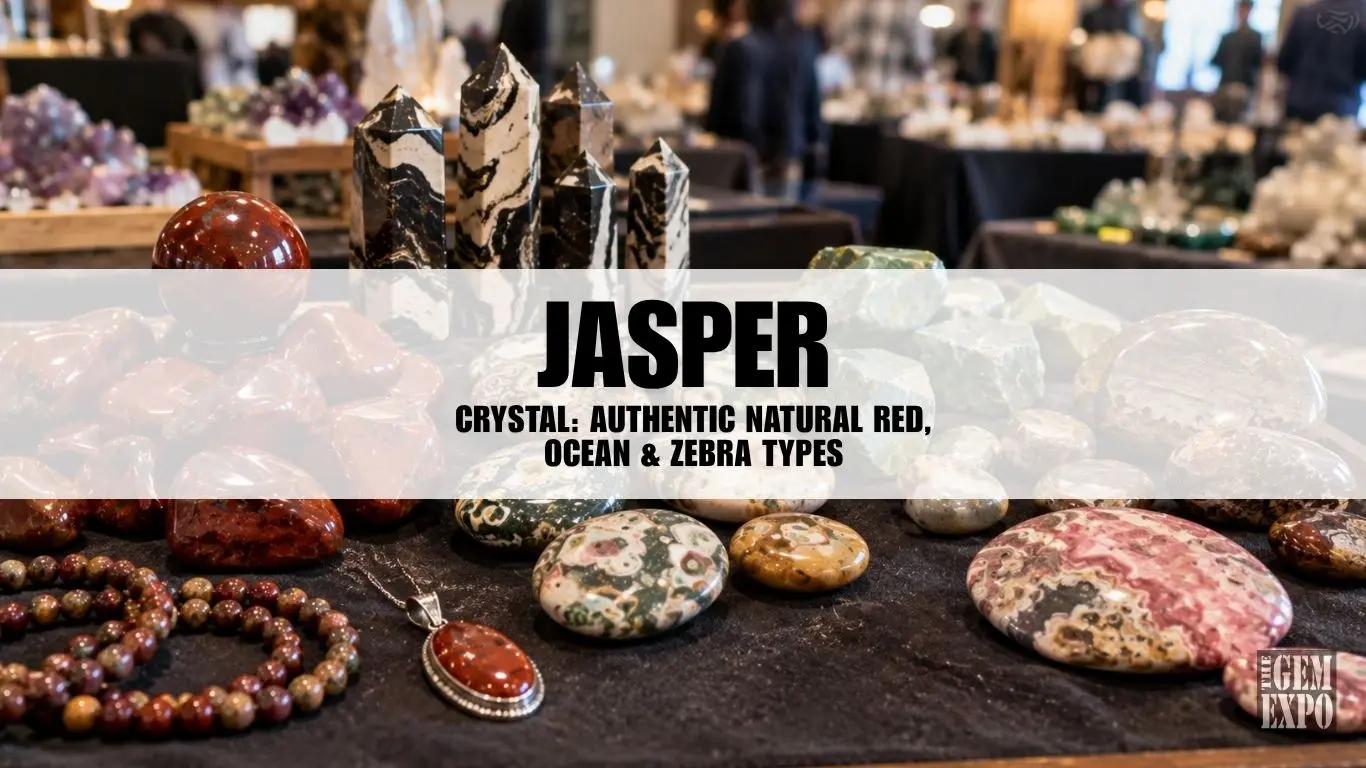

Some stones shout. Jasper whispers. Set a piece of red jasper beside a sparkling amethyst, and most people walk right past it. Then they pick it up. It feels cool, smooth and heavier than expected, and the pattern on its face is one that no machine could copy. That quiet pull is why a Jasper Crystal has stayed popular for thousands of years. Jasper is an opaque, fine-grained form of chalcedony, which is a type of quartz. It appears in red, green, brown, black, yellow and even blue. This article explains the main types, what each colour is said to mean, how to spot a real piece and how to care for it at home.
Want to see one in person? The next Gem Expo show runs November 27 to 29, 2026, at the Hyatt Regency Toronto, 370 King St West. Tickets cost $12 for one day, $22 for a 3-day pass and $6 for students and seniors. Come and hold the stones before you choose.
What Is Jasper? A Plain Answer
Jasper is a colourful stone made mostly of silica. Tiny quartz grains sit so tightly together that light cannot pass through, so the stone looks solid instead of see-through. Other minerals add the colour. Iron oxide makes reds and browns, while minerals such as chlorite give green.
The basic jasper meaning is “spotted stone.” Ancient people carved the jasper stone into seals, beads and small charms because it is hard and takes a shine. Today, jasper the stone is sold as tumbled pieces, spheres, towers, bracelets and raw chunks.
Is Jasper a Mineral, a Rock, a Stone or a Crystal?
This question comes up all the time on Reddit and Quora. The short answer is “a bit of each.” Here is how each word fits.
Jasper the Mineral
Jasper is a kind of quartz, and quartz is a mineral made of silicon dioxide. So jasper the mineral is real, although one piece can also hold other minerals that change its colour and pattern. Unlike a clear quartz crystal, which grows in neat points, jasper is cloudy and solid.
Jasper Rock
Geologists call it jasper rock when it forms in large masses, veins or filled cracks instead of single big crystals. It starts when water full of silica seeps through volcanic ash or mud, then slowly hardens over millions of years. Each jasper mineral sample grows in a different spot, so its pattern is one of a kind. Some pieces are made of broken bits glued back together, and these are called brecciated jasper.
Jasper Stone
In shops, jasper stone simply means a piece that has been cut and polished. On the Mohs scale, its hardness is about 6.5 to 7, so it resists scratches well. That toughness is one reason the jasper gemstone works in rings and everyday jewellery.
Crystalline Jasper and Crystal Jasper
Here is the tricky part. Jasper does not grow in big, clear points. It is made of microscopic crystals, so crystalline jasper is the most accurate name for it. Still, most stores list crystal jasper under “crystals,” since the healing community uses that word for any energy stone. In short, a Jasper Crystal in a shop is a stone built from tiny crystals, not one large crystal.
Jasper Colours: What Each One Looks Like
Colour is the first thing people notice. Jasper colours cover nearly the whole rainbow, and the jasper stone colour comes from trace minerals, so no two pieces match exactly.
Red Jasper
Red jasper stone is the best-known colour. Iron oxide gives it a brick red to deep blood red look, often with black or cream lines. A raw red jasper rock can look dull, then glow once it is polished. If you like red chalcedony, compare it with carnelian, a more see-through red stone, which leans toward orange.
Green Jasper
Green jasper ranges from soft sage to deep forest green. A close cousin is bloodstone, a dark green stone dotted with red spots.
Buyers often mix up green jasper with green aventurine, which is shinier and sparkles under light. Jasper stays matte and smooth.
Brown Jasper
Brown jasper is warm and earthy, from chocolate to sand, and many pieces show patterns that look like tiny landscapes. People who love the golden glow of tiger eye often enjoy brown jasper for the same steady feeling.
Black Jasper
Black jasper is deep and solid, often with white or grey lines. The popular zebra jasper belongs here, with bold black and cream bands that look like animal stripes. A tumbled piece of black jasper feels smooth and calm in the hand.
Blue Jasper
Blue jasper is the trickiest colour. Natural pieces exist but are uncommon, and many bright blue stones in shops have been dyed. If you want a dependable natural blue, sodalite is a safer choice. Check any blue jasper under good light and look for dye pooled in the cracks.
Types of Jasper: The Kinds You Will Meet Most
There are dozens of jasper varieties, and most are named for their pattern, place or look. The types of jasper below are the ones buyers see first.
| Type | What it looks like | Common use |
|---|---|---|
| Red jasper | Solid brick to deep red | Palm stones, pocket stones |
| Ocean jasper | Round “eye” patterns in green, white, pink and brown | Worry stones, spheres |
| Zebra jasper | Black and cream bands | Towers, bracelets |
| Imperial jasper | Soft pink, cream and brown blends | Carvings, cabochons |
| Green jasper | Sage to forest green | Beads, pendants |
| Fancy jasper | Bright, unusual colour mixes | Collector pieces |
| Agatized jasper | Jasper mixed with banded, see-through agate | Slices, display pieces |
Ocean jasper is famous for round, eye-like circles. Much of it is collected in Madagascar. Its soft greens and pinks make it one of the most loved kinds of jasper for palm stones and spheres.
Imperial jasper usually shows creamy pink and brown swirls and is often linked to Mexico. Fancy jasper is a loose trade name for pieces with bold patterns or rare colours. No strict rule exists, so judge the piece, not the label.
Agatized jasper forms when a jasper mass holds patches of clearer agate inside. The mix of matte and glassy zones makes every slice different.
Labels can also mislead. Shops often sell unakite as “unakite jasper,” yet it is really granite with green epidote and pink feldspar. It is still a lovely stone, just not true jasper.
Which Jasper Should You Choose? Step by Step
With so many jasper varieties, start with one simple goal. Follow these five steps.
- Pick your goal. Want grounding and root chakra support? Try a red jasper stone. Want calm? Try ocean jasper. Want a bold look? Try zebra jasper. Match jasper colours to the mood you want.
- Pick your shape. Tumbled stones suit pockets, crystal jasper spheres and towers suit desks, raw jasper rock suits display, and beads suit bracelets.
- Set a budget. At the time of writing, small tumbled red jasper pieces cost about CA$2 to CA$3 in Canadian online shops. Ocean jasper tumbles start near CA$9, and handmade pendants cost more.
- Check for dye and fakes using the steps later in this article.
- Buy from someone who can name the type and the origin.
Not sure which Jasper Crystal suits you? Bring your questions to the next Gem Expo show at the Hyatt Regency Toronto, November 27 to 29, 2026. Exhibitors bring crystals, minerals and jewellery from Canada and around the world, so you can compare weight, colour and polish in your own hand.
Jasper and Agate: What Is the Difference?
Jasper and agate are close relatives. Both are chalcedony, and both are made of silica. The main difference is light. Jasper is opaque, while agate is translucent and often shows clear bands. When both show up in one piece, the stone is called agatized jasper. To see the banded side of the family, read about how agate forms and looks. Many collectors keep jasper and agate on one shelf because their colours match so well.
The Meaning of the Name Jasper and Its History
The meaning of the name Jasper goes back to the Greek word iaspis, which came from an older word in the Near East. It is often translated as “spotted stone.” Red jasper was carved into amulets in ancient Egypt, and many old texts place jasper among prized stones. That jasper significance as a stone of strength has lasted for ages. Through that long history, a Jasper Crystal has gone from carved seals to pocket stones.
Today, gemologists class it as semi-precious. Still, many sellers call it a jasper precious stone because of its long past. Many readers type precious stones jasper into a search bar hoping for a clear answer. Here it is: jasper is semi-precious now, yet ancient cultures treated it as precious. Jasper the gemstone earned that respect through beauty, hardness and easy carving.
A well-polished jasper gem can rival far costlier stones in colour, which explains why people still call it a jasper precious stone. Set in silver, a single cabochon becomes a jasper jewel that costs much less than a sapphire. The meaning of the name Jasper also shows up in baby-name searches, but this article sticks to the stone.
Red Jasper Meaning, Benefits and Healing Properties
A quick note first. These ideas come from tradition, not medical research, and jasper is no substitute for a doctor. The broad jasper meaning is support, but each colour adds its own twist.
Red jasper meaning is tied to courage, stamina and steadiness. In crystal healing, the red jasper crystal meaning links the stone to the root chakra, the energy point at the base of the spine, and to a feeling of grounding.
The jasper significance in many cultures is protection. Old stories say travellers carried it for safe trips. Today, the red jasper stone meaning most people repeat is “a stone of endurance,” and shops that explain the red jasper rock meaning use nearly the same words.
Modern readers usually care about two labels. The jasper metaphysical meaning is support and stability. The jasper spiritual meaning goes a little further and speaks of a bond with the earth and with your own body. A Jasper Crystal in deep red is the one most people pick for this.
These are the red jasper benefits people mention most: steady motivation, calm under stress and a sense of security. Writers who cover red jasper healing properties add better focus and stamina to the list. Again, these are beliefs, not proven effects.
Imagine a student heading into a big exam. She slips a red jasper gem into her coat pocket. It is not magic. Touching a smooth stone when nerves rise gives her hands a job and her breathing a rhythm. Many people describe the same comfort with any red jasper gemstone they carry every day.
How to Use Red Jasper, Step by Step
- Pick your piece. A small palm stone or red jasper crystal that feels good in your hand works best.
- Decide what the stone stands for to you. Use the red jasper rock meaning you like best, such as courage or calm.
- Carry it in a pocket or bag. A jasper red crystal set in a bracelet works too.
- When stress rises, hold it for one minute and breathe slowly. Think of the jasper metaphysical meaning, which is steadiness.
- At night, sit quietly with it near your bed. If the jasper spiritual meaning matters to you, this is the calm moment for it. Some people rest it on the lower belly, near the root chakra.
- After two weeks, note which red jasper benefits, if any, you felt.
How to Tell If Jasper Is Real, Step by Step
Picture a first-time buyer who falls for the brightest blue stone on the table. Then she spots colour pooled in the cracks and asks the seller about it. The answer is “dyed.” She walks away with a natural piece and no regrets. These six steps help you do the same.
- Check the light. Real jasper is opaque. Crystalline jasper is made of grains too small to see, so it never looks glittery. A raw red jasper rock may look dull, and that is normal.
- Study the pattern. Natural lines wander and never repeat perfectly. The same swirl on many pieces points to a mould.
- Feel the weight. Jasper feels cool and solid. Plastic feels light and warms fast.
- Test the hardness. Rub an edge on a spare piece of glass. Real jasper scratches glass, and a steel knife cannot scratch it. Try this only on a hidden spot.
- Look for dye. Neon colour, dye pooled in cracks or colour on a damp cloth are warning signs. Natural red comes from iron oxide, so it looks earthy, not hot pink. An odd jasper stone colour is often the first clue.
- Ask questions. A good seller can name the type, the origin and any treatment. Fake Jasper Crystal listings often skip all three.
How to Care for Jasper
Good news: most types of jasper are easy to keep. Jasper the mineral is tough, yet it can still chip if dropped. Follow these steps.
- Rinse the stone quickly in lukewarm water, then dry it with a soft cloth.
- Skip long soaks for dyed, sealed or glued pieces, and avoid harsh cleaners and salt.
- As a jasper mineral with a hardness near 7, it resists scratches. Even so, a red jasper gemstone can be marked by harder gems such as sapphire, so keep each stone in its own soft pouch.
- Keep a dyed red jasper crystal out of long direct sun, since dye can fade.
- To “recharge” it, many people rest it overnight on a selenite plate. Selenite dissolves in water, so keep the plate dry.
A well-kept Jasper Crystal can last a lifetime and be passed on like a family keepsake.
Jasper Jewellery and Gifts
Jasper looks good against silver and gold, and its grounding feel suits daily wear. Jasper the gemstone is tough enough for bracelets and rings. Many kinds of jasper work well as beads, so a bracelet that mixes red with ocean jasper looks rich without a high price.
A jasper red crystal pendant makes a simple gift. Many come with a card that explains the red jasper crystal meaning or the red jasper stone meaning, which makes them easy to give. Buyers drawn to red jasper healing properties often choose beads, since the stone then rests against the skin all day. Others simply enjoy the red jasper meaning of courage on a bad day.
When you search for precious stones jasper online, expect prices from a few dollars to well over a hundred. A red jasper gem cut into a smooth dome, called a cabochon, looks bold in silver. Set by hand, it becomes a jasper jewel that sits at the top of that range.
For the science side of the story, the Wikipedia page on jasper covers how it forms and lists many trade names.
FAQs
What zodiac sign is jasper linked to?
There is no official zodiac match for jasper, and sources disagree. Many crystal traditions link red jasper to fire signs such as Aries, while others connect it to Scorpio. Ocean jasper is often paired with water signs. Treat these pairings as personal tradition, not science, and choose the colour that feels right to you.
Which crystals pair well with jasper?
In crystal traditions, red jasper is often paired with clear quartz for clarity, carnelian for extra drive, and black tourmaline for protection. Ocean jasper is often matched with rose quartz for gentle calm. These pairings are based on belief, not research, so choose by colour and feel. Store each stone in its own pouch to prevent scratches.
Is it safe to put jasper in a water bottle?
Direct contact is not recommended. Jasper is mostly stable quartz, but dyed, sealed or mixed-mineral pieces can leach colour or trace minerals, and cheap pieces may contain unknown coatings. If you like the idea, use the indirect method: seal the stone in a clean glass vial and set it beside the bottle. This advice is general, not medical.
Is jasper rare or valuable?
Most jasper is common and affordable. Value rises with bold patterns, clean polish, size and a clear origin. Ocean jasper with crisp eye patterns and large, high-grade pieces usually cost more than plain small stones. Natural colour matters too, since dyed stones sell for less. Ask for the type, origin and any treatment before paying a premium.
Where should I keep jasper at home or work?
Common placements are a desk for focus, a bedside table for calm, or near the front door for a protective feel. Red jasper suits workspaces, while ocean jasper suits relaxing spaces. These placements come from tradition. Practically, keep the stone out of reach of children and pets, since small tumbled pieces can be swallowed.
See Jasper in Person at The Gem Expo
Reading helps, but holding is better. Weight, colour and polish are hard to judge on a screen. Jasper the stone looks different under warm shop light than in daylight, and a good table lets you compare both. If you want to hold a real Jasper Crystal before you buy, come to The Gem Expo in Toronto. It is a gem show for crystals, gemstones, minerals, beads and handmade jewellery from Canada and around the world.
Next show: November 27 to 29, 2026, at the Hyatt Regency Toronto, 370 King St West, about 500 metres west of St Andrew subway station. Hours: Friday 11:30 a.m. to 8 p.m., Saturday 11 a.m. to 7 p.m., Sunday 11 a.m. to 6 p.m. Tickets: $12 for one day, $22 for a 3-day pass, $6 for students and seniors. Join the mailing list to get a personal $2 off coupon by email for every show. More dates: March 19 to 21, 2027, July 23 to 25, 2027, and November 5 to 7, 2027.