

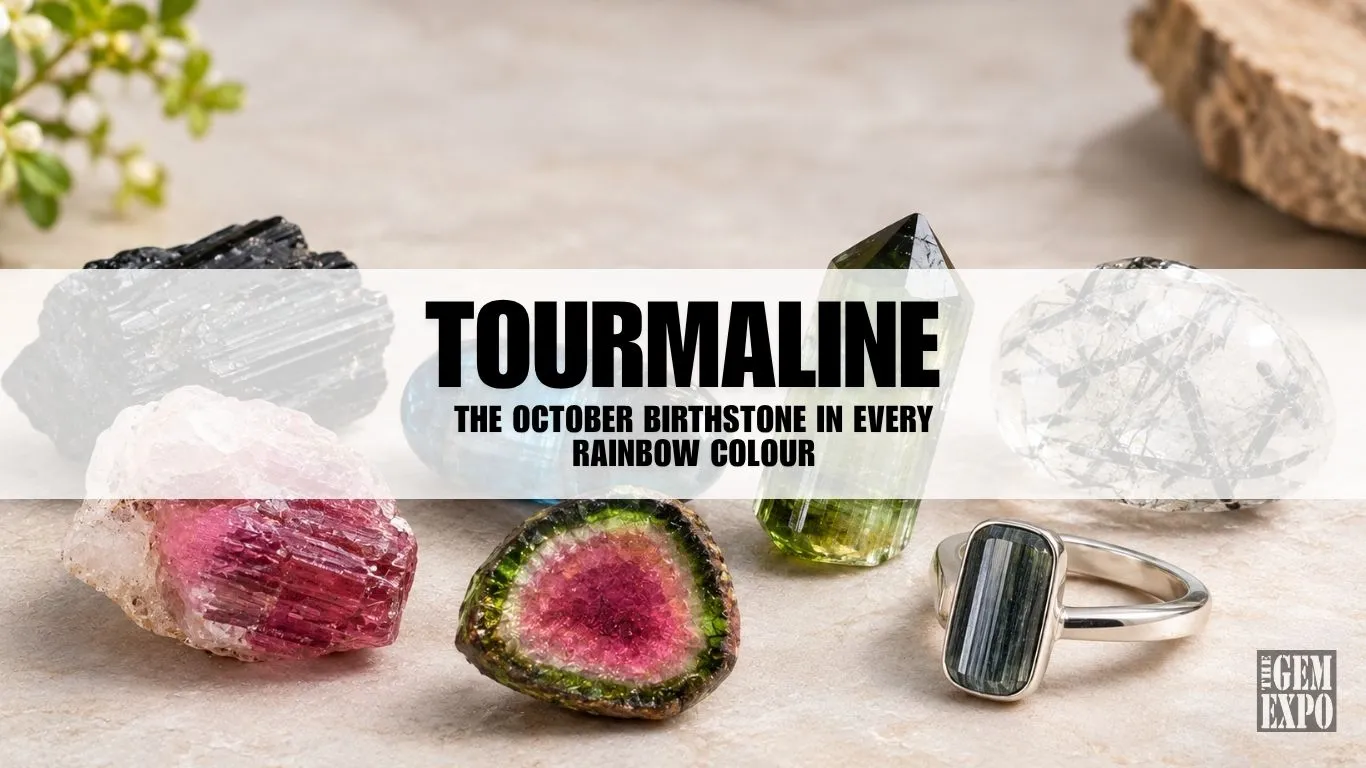

Hold one stone up to the light and watch it change from grassy green to hot pink along its length. That single crystal is Tourmaline, and no other gem on Earth wears this many colours at once. An old Egyptian tale says the stone travelled up through a rainbow on its way to the surface and grabbed every shade it passed. Scientists have a duller explanation, but honestly, the legend fits better. This is the gem that refuses to pick just one look.
At The Gem Expo, first-time visitors often stop dead at the tourmaline tables. They came for one colour and leave holding three. If you want to see that magic in person, our next show runs November 27–29, 2026 at the Hyatt Regency in downtown Toronto. Grab a ticket, bring a friend, and let the stones surprise you.
What Is Tourmaline?
Tourmaline is a natural mineral made mostly of boron, silicon, and aluminum. It grows deep underground and shows up in more colours than any other gem. On the Mohs hardness scale it sits around 7 to 7.5, which means this tourmalines stone is tough enough for daily wear in rings and bracelets. Its name comes from the old Sinhalese words “tura mali,” meaning a stone with mixed colours. That is a perfect description.
Because one tourmaline crystal can hold two or three colours in a single piece, collectors treat each one like a tiny fingerprint. No two look exactly alike. That rarity is a big part of why this precious stone tourmalines stays popular with buyers who want something nobody else owns.
The Tourmaline Colours You Should Know
The tourmaline gemstone family is huge, so here is the simple version. Each colour has its own personality and its own fans.
Black Tourmaline
Black tourmaline is the most famous member of the group, and not because it is pretty in the usual way. People love it for protection. A black tourmaline crystal is often called a shield stone, placed near doorways or carried in a pocket. Fans point to black tourmalines benefits like grounding, calm, and blocking bad energy. Many also believe in tourmaline stone benefits tied to EMF, keeping a black tourmaline stone beside laptops and routers. The black tourmalines meaning comes down to one word: safety. A black tourmalines bracelet is the easiest way to keep that steady feeling with you all day, and a rough black tourmalines rock looks striking on a shelf.
If dark grounding stones speak to you, our writers also cover black obsidian and its protective reputation in plain language.
Pink and Rose Tourmaline
Pink tourmaline is the soft, romantic side of the family. The pink tourmaline meaning centres on love, kindness, and healing the heart. A pink tourmaline ring makes a sweet gift, and the tourmalines pink shade ranges from baby blush to deep magenta. Some sellers call the paler shade rose tourmalines or tourmaline rose, and that gentle tourmalines pink glow pairs beautifully with silver. If you love pink stones, you will also enjoy reading about the calming energy of rose quartz.
Blue and Green Tourmaline
Blue tourmalines, sometimes called indicolite, is rare and cool, like a slice of deep ocean. Green tourmalines is easier to find and full of life. Both fit modern jewellery well, and blue tourmaline in particular fetches high prices when the colour is strong. Green fans often compare it to the fresh look of green aventurine.
Watermelon Tourmaline
This crowd favourite is pink in the middle and green on the outside, just like the fruit. Slice it thin and you get a little edible-looking treasure. It is the clearest proof that tourmalines simply does not follow the one-colour rule.
Tourmaline as the October Birthstone
If you were born in October, this gem is yours. Tourmalines shares the tourmaline birthstone title for that month, sitting proudly next to opal. Because it comes in every colour, an October baby can pick a shade that matches their style instead of settling for one assigned tone. That freedom makes the tourmalines birthstone one of the most loved gifts of the year. It is also the traditional gem for an eighth wedding anniversary, so it carries meaning far beyond looks. For another popular birthstone read, see our guide to the fiery beauty of ruby jewellery.
Planning a birthday surprise? A colour-matched tourmalines piece from a live vendor beats anything mass-produced. Come find yours at The Gem Expo this November and meet the people who cut and set these stones by hand.
Tourmaline Meaning and Everyday Energy
Beyond beauty, the tourmalines meaning ties into balance. Each colour is said to support a different part of life: pink for the heart, green for growth, black for protection. Crystal lovers keep a tourmalines crystal nearby during stressful days for a sense of steadiness. You do not have to believe every claim to enjoy the calm ritual of holding a smooth stone. Curious how energy stones are chosen? Our team explains it well in the meaning behind amethyst.
How to Spot Real Tourmalines: A Quick Guide
Top competitor pages skip this, so here is the honest, step-by-step check buyers actually need.
- Look for colour zoning. Real tourmalines often shifts shade along the crystal. Perfectly even colour can be a red flag.
- Check the weight. Genuine tourmalines stone feels solid and cool in the hand, not light like plastic.
- Watch it in daylight. Turn the stone slowly. Real tourmalines can look lighter or darker from different angles.
- Ask about origin. A trusted seller will happily tell you where the tourmaline gemstone came from.
- Buy from real people. Nothing beats seeing the stone in person and asking questions face to face.
That last step is exactly why gem shows matter. You get to hold the tourmaline crystal before you buy.
Tourmalines Colour Comparison Table
| Colour | Common Name | Believed Meaning | Best For |
|---|---|---|---|
| Black | Schorl | Protection, grounding | Bracelets, home decor |
| Pink | Rubellite | Love, healing | Rings, gifts |
| Blue | Indicolite | Calm, clarity | Statement jewellery |
| Green | Verdelite | Growth, energy | Everyday wear |
| Multi | Watermelon | Balance | Collectors |
Choosing Tourmaline Jewellery
Tourmaline jewellery works for every budget and taste. A tourmalines ring is the classic choice, and rings with tourmalines flatter almost any skin tone thanks to the wide colour range. A single pink tourmaline ring reads romantic, while a green or blue stone feels fresh and modern. Prefer wrist pieces? A black tourmalines bracelet pairs grounding energy with everyday style.
When shopping, match the metal to the colour. Warm pinks glow in rose gold, cool blues pop against white gold or silver. If you want to compare against another blue favourite, take a look at the ocean tones of aquamarine.
Caring for Your Tourmaline
Good news: tourmalines is low-maintenance. Wipe it with a soft, damp cloth and mild soap. Skip harsh chemicals and long soaks. Store each tourmaline stone separately so harder gems do not scratch it. With basic care, your tourmaline gemstone stays bright for a lifetime. For more delicate stones that need gentler handling, our selenite care notes are worth a read.
Quartz, Tourmaline, and Other Pairings
You will sometimes see quartz tourmaline, where fine black tourmalines needles grow right inside clear quartz. This natural pairing, often called tourmalinated quartz, blends clarity with grounding energy in one piece. It is a favourite for people who want the best of both worlds without buying two separate stones. If layered crystals interest you, browse the sparkle of natural quartz next.
FAQs
Is tourmaline a rare and expensive gemstone?
Most tourmaline is affordable, which is part of its charm. Common green and pink stones stay budget-friendly, so almost anyone can own one. Prices climb fast for rare types like neon Paraiba tourmaline, deep blue indicolite, and clean watermelon slices. So the honest answer is both: everyday tourmaline is easy on the wallet, while top colours can rival fine sapphire.
Where does tourmaline come from?
Tourmaline is mined all over the world. Brazil produces the biggest supply and the widest colour range. Africa gives us some of the finest stones, especially from Mozambique, Nigeria, and Tanzania. Sri Lanka, Afghanistan, and the United States add more. This global spread is why gem shows can offer so many shades side by side from different corners of the earth.
Can tourmaline be worn every day?
Yes, tourmaline handles daily wear well. It scores 7 to 7.5 on the Mohs hardness scale, which is tough enough for rings, pendants, and bracelets. Just avoid hard knocks and store it away from harder gems like diamond or sapphire that could scratch it. With gentle handling and the odd clean, your tourmaline stays bright for years.
What is the difference between tourmaline and ruby or pink sapphire?
They can look alike, but they are different minerals. Ruby and pink sapphire are both corundum, harder at 9 on the Mohs scale and usually pricier. Pink tourmaline is softer at around 7.5 and far more affordable. Tourmaline also shows more colour zoning and a wider shade range, giving buyers flexibility that ruby and sapphire simply cannot match.
How do I cleanse and recharge my tourmaline crystal?
Keep it simple. Wipe your tourmaline with a soft, damp cloth to clean it physically. For an energy reset, many crystal lovers leave it in soft moonlight overnight or rest it on a bed of clear quartz for a few hours. Avoid salt water and long soaks, since these can dull the surface over time and are not needed.
See Tourmaline in Person at The Gem Expo
Reading about a rainbow gem is one thing. Watching a tourmaline crystal flash three colours under the lights is another. The Gem Expo brings together trusted Canadian and international vendors under one roof, so you can compare stones, ask real experts, and take home a piece with a story.
Mark your calendar for November 27–29, 2026 at the Hyatt Regency Toronto. Whether you want a protective black tourmaline stone, a romantic pink tourmaline ring, or a rare blue tourmaline showpiece, you will find it here. Bring your questions, bring your curiosity, and let a real tourmaline win you over in person.
For deeper gemstone knowledge before you visit, the Gemological Institute of America’s tourmaline overview is a solid, science-backed starting point.